Introduction: Crypto Income Is No Longer “Invisible” in Pakistan
Look, I get it, taxes are boring but if you are a freelancer earning from cryptocurrency in Pakistan, you need to understand one thing very clearly: crypto earnings are no longer outside the tax radar in 2026.
Whether you are earning through:
- Bitcoin trading
- USDT payments from clients
- NFT sales
- Blockchain freelancing gigs
Under Pakistan Tax Year 2025-2026 regulations, the Federal Board of Revenue (FBR) is increasingly focused on digital income tracking, especially foreign currency inflows and crypto-related transactions.
Here is the real talk: many freelancers think crypto is “hidden income”—but in reality, banking conversions, exchanges, and wallets still create a traceable financial footprint.
At gigtax.site, we always guide freelancers toward safe, compliant, and tax-efficient financial practices.
Let’s break down taxation on cryptocurrency earnings for freelancers in Pakistan 2026 in a practical way.

Is Cryptocurrency Legal in Pakistan?
This is the first confusion point.
As of 2026:
- Crypto is not officially recognized as legal tender
- But earning through crypto is still taxable if it converts into income
- FBR focuses on income source, not asset type alone
So if you earn crypto from freelance work and convert it into PKR or use it for value exchange, it becomes taxable income under existing income tax laws.

How FBR Views Crypto Earnings for Freelancers
FBR generally treats crypto earnings as:
- Foreign income (if received from abroad)
- Business income (if linked to freelancing services)
- Capital gains (if trading/holding profit)
The classification depends on how you earn it.
Here is the truth: classification matters more than the crypto itself.

Types of Cryptocurrency Income for Freelancers
Let’s break it down clearly.
1. Crypto Received as Freelance Payment
Example:
- Client pays you in USDT or Bitcoin
This is treated as:
- Business income (freelancing income)
2. Crypto Trading Profits
Example:
- Buy BTC at low price, sell at higher price
This is treated as:
- Capital gains income
3. NFT or Digital Asset Sales
Example:
- Selling design NFTs or digital artwork
This is treated as:
- Business income or digital service income
4. Staking or Passive Crypto Earnings
Example:
- Rewards from staking platforms
This may fall under:
- Other income category
Taxation on Cryptocurrency Earnings for Freelancers in Pakistan 2026
Now let’s simplify tax impact.
FBR does not have a separate crypto tax slab yet, so crypto earnings are taxed under general income tax slabs.
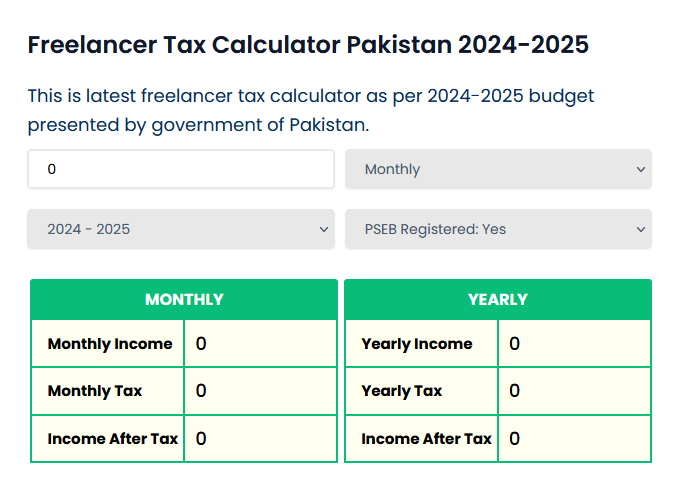
Pakistan Freelance Tax Slabs (2025-2026)
| Annual Income (PKR) | Tax Rate |
|---|---|
| 0 – 600,000 | 0% |
| 600,001 – 1,200,000 | 5% |
| 1,200,001 – 2,400,000 | 15% |
| 2,400,001 – 3,600,000 | 25% |
| Above 3,600,000 | 30% |
Crypto earnings are added to your total income and taxed accordingly.
How Crypto Income is Converted for Tax Filing
FBR requires conversion into PKR using:
- Market exchange rate at time of receipt
- Bank conversion rate (if withdrawn to bank)
- Documented valuation method
This means:
You cannot ignore crypto income just because it stays in wallet.
Step-by-Step Guide: How Freelancers Should Report Crypto Earnings
Now let’s make this practical.
Step 1: Track All Crypto Transactions
Record:
- Date of transaction
- Amount received
- Wallet address
- Exchange rate at time of receipt
Even small transactions matter.
Step 2: Convert Crypto to PKR Value
Use:
- Average market rate
- Exchange platform rate
- Bank conversion rate
Be consistent in method.
Step 3: Categorize Income Type
Separate into:
- Freelance income (services)
- Trading profit
- Passive crypto income
This helps avoid confusion during filing.
Step 4: Maintain Digital Proof
Keep:
- Wallet screenshots
- Exchange statements
- Payment confirmations
Without documentation, claims become weak.
Step 5: Record in Monthly Income Sheet
Add crypto income alongside:
- USD freelance payments
- Local income
- Other earnings
Even a simple calculater sheet works if maintained properly.
Step 6: Declare in Annual Tax Return
When filing:
- Add crypto earnings under “other income” or “business income”
- Ensure consistency with bank records
- Match total income with declared figures
Step 7: Maintain Wealth Statement Accuracy
If crypto is held as asset:
- Declare holdings in wealth statement
- Show valuation at year-end
Comparison Table: Crypto Income vs Traditional Freelance Income
| Feature | Crypto Income | Traditional Income |
|---|---|---|
| Traceability | Medium | High |
| FBR Scrutiny | Increasing | Standard |
| Conversion Requirement | Yes | No |
| Volatility Risk | High | Low |
| Tax Treatment | Income-based | Income-based |
Common Mistakes Freelancers Make with Crypto Taxes
Let’s fix the biggest mistakes:
1. Not Reporting Crypto at All
This is risky. FBR can trace bank conversions.
2. Ignoring Conversion Records
Without PKR valuation, reporting is incomplete.
3. Mixing Trading and Freelance Income
Both must be separated clearly.
4. Not Keeping Wallet History
Lost records = weak compliance.
Here is the truth: crypto is not invisible—it is just complex.
Real Talk: Why Freelancers Think Crypto is Untaxable
Most freelancers assume:
- “It’s decentralized, so no tax”
- “FBR cannot track wallets”
- “It stays in USDT, so it doesn’t count”
But here is the big brother advice:
The moment crypto enters your financial ecosystem, it becomes taxable activity.
Especially when converted or used for business purposes.
Risk of Non-Compliance in 2026
With increasing digital monitoring:
- Bank inflows are tracked
- Exchange platforms are monitored
- Income matching systems are improving
This means undeclared crypto income can lead to:
- Tax penalties
- Audit notices
- Income reassessment
Why Proper Crypto Tax Planning Matters
When you handle crypto taxation correctly:
- You avoid penalties
- You maintain clean financial history
- You improve creditworthiness
- You stay ATL compliant
And most importantly—you sleep peacefully.
Why gigtax.site Recommends Structured Crypto Reporting
At gigtax.site, we focus on one principle:
Digital income must be documented income.
Whether you earn from freelancing or crypto:
- Tracking is essential
- Reporting is mandatory
- Planning is powerful
Final Thoughts
Understanding taxation on cryptocurrency earnings for freelancers in Pakistan 2026 is no longer optional—it is part of modern financial responsibility.
If you:
- Track crypto transactions properly
- Convert values accurately
- Categorize income correctly
- Report consistently
Then you can stay fully compliant while continuing to earn in digital assets.
And honestly, once you build this system, crypto stops being confusing and starts becoming just another income stream.
CTA: Stay Compliant, Stay Financially Smart
If you are serious about freelancing and crypto earnings in Pakistan, don’t ignore compliance.
Become a filer, stay on the ATL, and manage your digital income professionally.
For expert tax guidance, crypto reporting strategies, and freelancer financial systems, visit gigtax.site—your trusted platform for building long-term financial stability in Pakistan’s evolving digital economy.