Category: Expense Management & Savings

  • Can I Deduct My Laptop Cost from Freelance Tax? (Pakistan FBR 2025-2026 Guide)

    Can I Deduct My Laptop Cost from Freelance Tax? (Pakistan FBR 2025-2026 Guide)

    Introduction: The Question Every Freelancer in Pakistan Asks

    Look, I get it, taxes are boring but if you’re a freelancer in Pakistan, your laptop is basically your entire business. So naturally, the biggest question is: “Can I deduct my laptop cost from freelance tax?”

    Here is the real talk: yes, you can deduct your laptop cost, but not in the way most beginners think. FBR (Federal Board of Revenue) doesn’t allow you to just subtract the full price in one go unless specific conditions are met under Pakistan Tax Year 2025-2026 rules.

    If you’re reading this on gigtax.site, you’re already in the right place because this is exactly the kind of financial clarity Pakistani freelancers need to scale safely and legally.

    Let’s break it down like a big brother explaining it over chai.

    Understanding Laptop Expense as a Business Asset (Not Just Expense)

    First mistake most freelancers make is thinking:

    “I bought a laptop for 200,000 so I will deduct 200,000 from tax.”

    Nope. That’s not how FBR sees it.

    In tax law, a laptop is considered a capital asset, not a simple expense. That means its cost is spread over time using depreciation.

    Why FBR Treats Laptop Differently

    Your laptop:

    • Has a useful life (usually 3–5 years)
    • Gains income over time
    • Is not consumed in one month

    So instead of full deduction, you get annual depreciation allowance.

    Here is the real talk: this is actually good for you because it spreads tax benefits over multiple years instead of one.

    FBR Rules for Laptop Deduction (Tax Year 2025-2026)

    Under updated FBR guidelines for freelancers and sole proprietors:

    1. Laptop is a Depreciable Asset

    You can claim depreciation each year under “business assets.”

    2. Must Be Used for Business Purpose

    If you also use it for gaming, Netflix, or personal work, FBR may reduce allowable percentage.

    3. Proper Invoice is Mandatory

    • Invoice in your name
    • Proof of payment (bank transfer preferred)
    • Purchase must be traceable

    4. Must Be Declared in Wealth Statement

    Your laptop becomes part of declared assets.

    If you skip this, your deduction can be rejected during audit.

    Depreciation Method for Laptop in Pakistan

    FBR allows straight-line depreciation method for most small business assets.

    Standard Depreciation Example

    • Laptop cost: Rs. 180,000
    • Useful life: 3 years
    • Annual depreciation: 33.33%

    So each year:

    • Deduction = Rs. 60,000

    Formula:

    Annual Depreciation=Cost of AssetUseful Life (Years)\text{Annual Depreciation} = \frac{\text{Cost of Asset}}{\text{Useful Life (Years)}}Annual Depreciation=Useful Life (Years)Cost of Asset​

    This is how your tax deduction is calculated yearly.

    Comparison Table: Full Expense vs Depreciation Method

    MethodDeduction TypeAllowed in PakistanRisk LevelTax Impact
    Full Expense Deduction100% in one year❌ Not allowed for laptopHigh (audit risk)Artificially lowers income
    Depreciation MethodSpread over years✅ Allowed under FBR rulesLowStable tax saving
    Personal Claim (no records)None❌ Not allowedVery HighNo benefit

    Step-by-Step Guide: How to Deduct Laptop Cost from Freelance Tax

    Now let’s go step by step like a proper consultant, not confusing tax jargon.

    Step 1: Buy Laptop in Business Name

    Make sure:

    • Invoice includes your name or business name
    • Payment is traceable (bank transfer preferred)

    Cash purchases are weak evidence, simple as that.

    Step 2: Record Laptop as Business Asset

    When filing tax records:

    • Categorize laptop under “Fixed Assets”
    • Mention purchase date and cost

    This is where most people skip and later face issues.

    Step 3: Decide Useful Life (Normally 3–5 Years)

    FBR typically accepts:

    • 3 years for tech depreciation (freelancers often use this)
    • 4–5 years if justified

    Be consistent. Don’t change every year just to maximize deduction.

    Step 4: Calculate Annual Depreciation

    Use straight-line method:

    • Divide total cost by useful life

    Example:

    • Rs. 180,000 ÷ 3 = Rs. 60,000/year

    Step 5: Enter in Income Tax Return

    While filing return:

    • Go to “Business Expenses”
    • Add depreciation under “Fixed Assets”
    • Ensure matching with income records

    Step 6: Maintain Proof for Audit

    Keep:

    • Invoice copy
    • Bank statement
    • Asset register (Excel is fine or calculater sheet works too)

    If FBR asks, you should be able to justify in 2 minutes.

    Common Mistakes Freelancers Make (Avoid These Seriously)

    Here is where people mess up:

    1. Claiming Full Laptop Cost in One Year

    This is the biggest mistake. FBR will likely disallow it.

    2. Not Declaring Laptop in Wealth Statement

    If it’s not declared, deduction becomes invalid.

    3. Mixing Personal & Business Use

    Be honest. If you use it 50% personal, then business claim should reflect that.

    4. No Proper Documentation

    No invoice = no deduction. Simple rule.

    Here is the truth: tax planning is not about hiding, it’s about structuring.

    Tax Slabs for Freelancers in Pakistan (2025-2026)

    Understanding your tax slab helps you see why deductions matter.

    Taxable Income (PKR)Tax Rate
    0 – 600,0000%
    600,001 – 1,200,0005%
    1,200,001 – 2,400,00015%
    2,400,001 – 3,600,00025%
    Above 3,600,00030%

    So if your laptop depreciation reduces taxable income, you might drop into a lower slab—which means real savings.

    Pro Tip: Laptop + Other Tech Deduction Strategy

    Smart freelancers don’t stop at laptops. They also include:

    • Internet bills
    • Software subscriptions (Adobe, Figma, etc.)
    • UPS / power backup
    • External monitors

    When combined, these create a strong expense structure that lowers tax legally.

    Real Talk: What FBR Actually Cares About

    Here is the honest part:

    FBR is not trying to stop you from claiming laptop expenses.

    They just want:

    • Proof
    • Logic
    • Consistency

    If your numbers make sense, your deduction is safe.

    If not, that’s when problems start.

    So don’t try to be overly aggressive. Be smart instead.

    Why This Matters for Pakistani Freelancers

    Most freelancers in Pakistan overpay tax simply because:

    • They don’t know depreciation rules
    • They ignore asset classification
    • They fear FBR unnecessarily

    But once you understand how it works, you start saving legally and confidently.

    And honestly, gigtax.site exists exactly for this reason—to simplify tax knowledge for freelancers so they can focus on earning, not stressing.

    Final Thoughts

    So, can you deduct your laptop cost from freelance tax in Pakistan?

    Yes—but not directly in full. You deduct it through depreciation over multiple years, properly documented under FBR rules for Tax Year 2025-2026.

    If you follow the correct process:

    • You stay compliant
    • You reduce taxable income legally
    • You avoid audit stress

    Simple, clean, and safe.

    CTA: Don’t Just Earn—Optimize Your Tax Life

    If you’re serious about freelancing in Pakistan, then you need more than income—you need financial strategy.

    Become a filer, stay on the ATL, and learn how to legally reduce your tax burden the right way.

    For expert guides, tax strategies, and freelancer financial growth resources, visit gigtax.site—your trusted partner in building a smarter freelance future in Pakistan.

  • How to Manage Electricity Bills as a Business Expense for Tax in Pakistan (2025-2026 Guide)

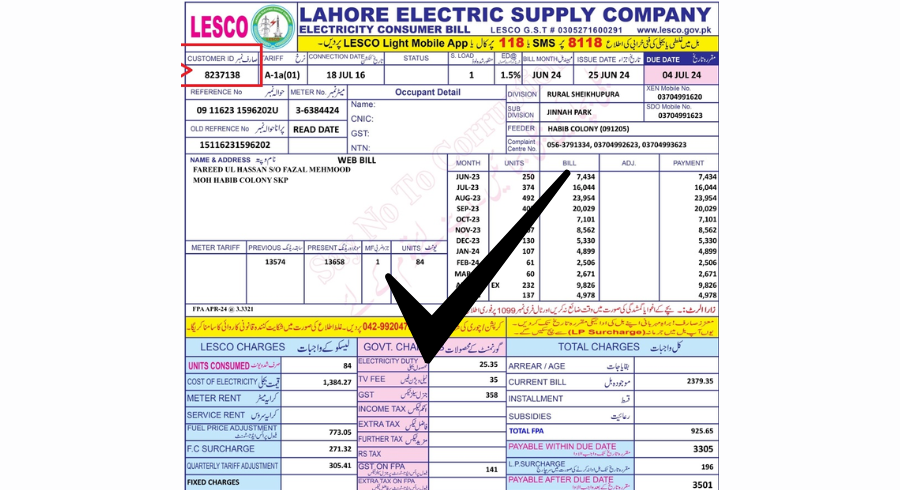
    How to Manage Electricity Bills as a Business Expense for Tax in Pakistan (2025-2026 Guide)

    Introduction: Why Electricity Bills Matter for Tax Filing

    Look, I get it, taxes are boring but if you’re a freelancer or running a small business in Pakistan, your electricity bill is actually one of the most underrated tax-saving tools you’ve got.

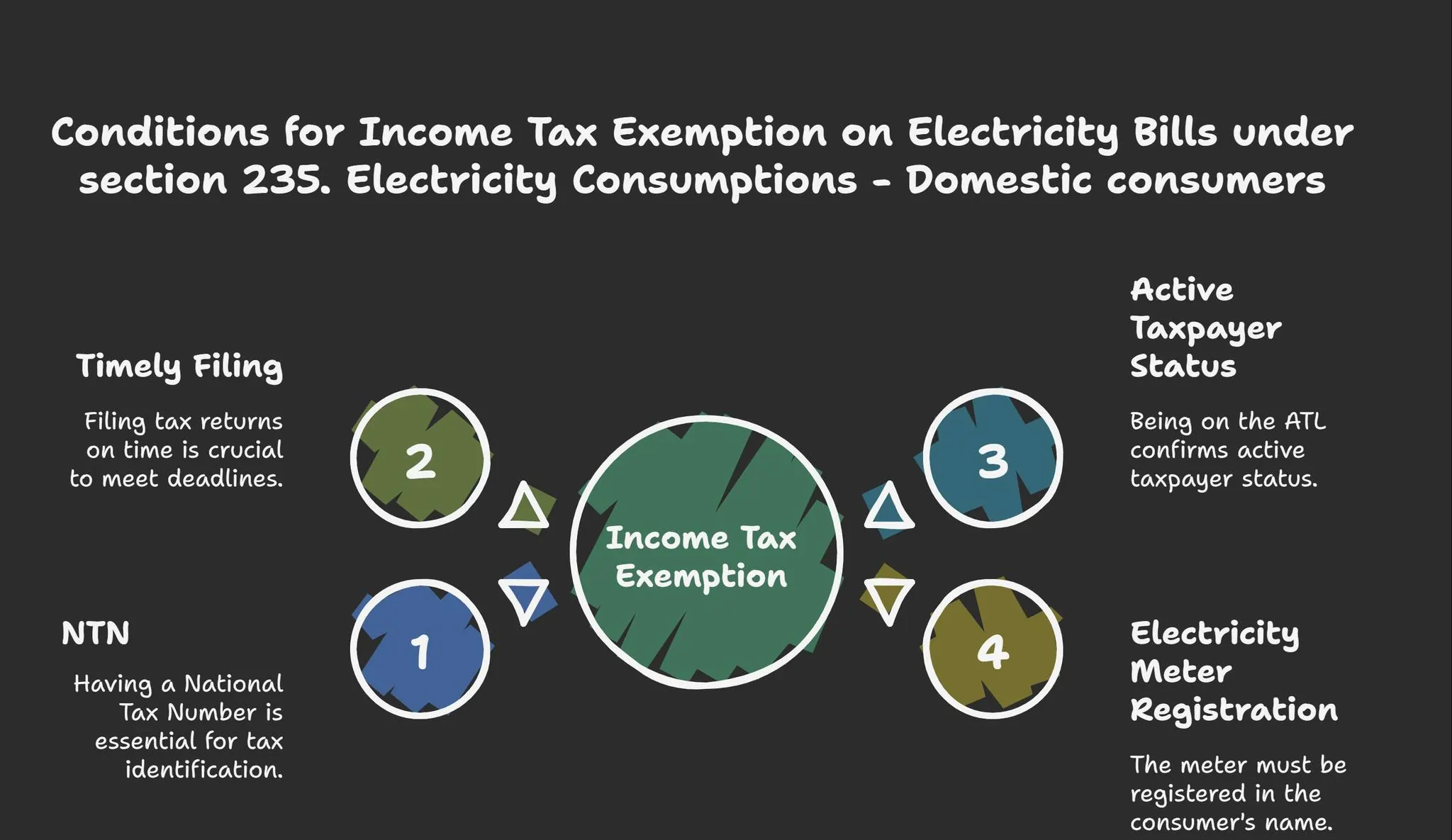
    Under the Pakistan Tax Year 2025-2026 regulations set by the Federal Board of Revenue (FBR), electricity expenses can be claimed as a business expense—but only if you manage them correctly.

    And here is the real talk: most freelancers either ignore it completely or mess it up and lose potential deductions. This guide will show you exactly how to do it right without getting into trouble with FBR.

    By the end, you’ll understand how to legally reduce taxable income using your electricity bill while staying compliant as an active filer on the ATL (Active Taxpayers List).

    Understanding Electricity Bills as a Business Expense in Pakistan

    In simple terms, any electricity used directly for earning income can be considered a deductible business expense.

    For example:

    • Freelancers working from home
    • IT companies and software houses
    • E-commerce sellers running operations from home
    • Digital agencies or content creators

    But there’s a catch—FBR does not allow personal usage to be fully deducted unless you can justify business use.

    So if your home electricity bill is Rs. 20,000 per month, you cannot blindly claim all of it unless 100% of your home is used for business (which is rare).

    FBR Rules (Tax Year 2025-2026) for Electricity Expense Deduction

    Here’s what FBR practically expects:

    1. Business Use Must Be Justified

    You must show that electricity is used for:

    • Workstations (laptops, desktops)
    • Office equipment
    • Internet routers for business
    • Production or service delivery setup

    2. Partial Deduction is Allowed

    If you work from home, you can only claim a percentage-based deduction.

    3. Proper Documentation is Mandatory

    Keep:

    • Electricity bills in your name
    • Bank payment proof (avoid cash payments if possible)
    • Business records showing income activity

    4. Linking Expense with Income is Critical

    FBR may ask: “How does this bill help you earn income?”
    If you can’t answer that, your claim is weak.

    Electricity Expense Deduction Methods

    There are two common methods accepted in Pakistan:

    1. Fixed Percentage Method

    You decide a reasonable percentage of electricity used for business.

    Example:

    • Total bill: Rs. 15,000
    • Business use: 40%
    • Deductible expense: Rs. 6,000

    2. Area-Based Method

    If you have a dedicated office space at home:

    Formula:

    • Business room size ÷ total home size × electricity bill

    Example:

    • Office room: 200 sq ft
    • Home: 1000 sq ft
    • Business portion = 20%

    This method is more acceptable if properly documented.

    Comparison Table: Personal vs Business Electricity Expense Treatment

    CriteriaPersonal UseBusiness Use
    Deduction Allowed❌ Not allowed✅ Allowed (partial/full)
    Documentation RequiredNoneElectricity bill + proof of business
    FBR Scrutiny LevelLowMedium to High
    Risk of AuditLowIf unsupported, high
    Tax BenefitNoneReduces taxable income

    Step-by-Step Guide: How to Claim Electricity Bill as Business Expense

    Now let’s break it down in a simple, no-confusion way.

    Step 1: Identify Business Usage

    First, honestly calculate how much electricity is used for work.

    Ask yourself:

    • How many hours do I work daily?
    • Do I run multiple devices?
    • Is this a dedicated workspace or shared home use?

    Don’t overestimate. FBR doesn’t like unrealistic claims.

    Step 2: Separate Personal and Business Usage

    Split your usage:

    • Work hours = business electricity
    • Non-work hours = personal usage

    Example:
    If you work 8 hours a day, you might reasonably claim 30%–50%.

    Step 3: Keep Bills and Payment Records

    Always keep:

    • Monthly electricity bills
    • Bank transaction proof
    • Screenshots if paid online

    Cash payments make your proccess weaker in case of audit.

    Step 4: Record Expense in Accounting Books

    Whether you use Excel, QuickBooks, or a simple calculater sheet:

    • Enter electricity bill under “Utilities Expense”
    • Assign business percentage
    • Update monthly records

    Step 5: Report in Income Tax Return (ITR)

    While filing tax return:

    • Go to “Business Expenses”
    • Enter electricity expense under utilities
    • Ensure it matches declared income activity

    Step 6: Maintain Consistency

    If you claim 40% one month, suddenly claiming 90% next month will raise flags.

    Consistency is key.

    Common Mistakes Freelancers Make (Avoid These!)

    Here is where most people mess up:

    1. Claiming 100% Home Electricity

    Unless you run a full-time office setup, this is risky.

    2. No Proper Evidence

    FBR can reject claims if your documents are weak.

    3. Mixing Personal and Business Accounts

    Always separate your business banking if possible.

    4. Ignoring ATL Status

    If you are not on Active Taxpayers List, your deductions won’t benefit you fully.

    Here is the truth: staying compliant saves more money than aggressive deductions.

    Advanced Tip: Optimizing Electricity Expense for Maximum Tax Savings

    If you want to go a step further:

    • Install a dedicated work meter (if possible)
    • Use UPS/inverter logs for backup usage proof
    • Keep monthly expense logs aligned with income invoices
    • Use digital payment methods only

    This makes your case stronger if FBR ever reviews your file.

    Electricity Expense Impact on Tax Liability (Simple Example)

    Let’s understand this practically:

    • Annual freelance income: Rs. 2,000,000
    • Electricity expense claimed: Rs. 120,000
    • Net taxable income: Rs. 1,880,000

    Now your tax is calculated on lower income.

    This is why proper expense handling matters.

    Why Freelancers in Pakistan Should Care About This

    Freelancers often ignore utility expenses thinking they are too small.

    But combined annually:

    • Electricity
    • Internet
    • Software subscriptions

    These can reduce taxable income significantly.

    At gigtax.site, we always tell freelancers: small expenses = big tax optimization when done right.

    Real Talk: FBR Doesn’t Hate You, But They Want Proof

    Here is the real talk.

    FBR is not your enemy. They just want:

    • Accuracy
    • Transparency
    • Proof-based claims

    If you follow rules properly, electricity bill deduction is 100% legal and safe.

    Don’t try shortcuts. That’s where people get into trouble.

    And yes, sometimes people think “nobody will check” but that’s exactly how audits happen.

    Final Thoughts

    Managing electricity bills as a business expense for tax in Pakistan (2025-2026) is not complicated—but it does require discipline.

    If you:

    • Track usage properly
    • Maintain records
    • Stay realistic with percentages
    • File correctly as an ATL taxpayer

    Then you are already ahead of 70% of freelancers in Pakistan.

    Taxes don’t have to be stressful, you just need the right system.

    And honestly, once you understand this process, you start saving money you didn’t even realize you were losing.

    CTA: Take Control of Your Tax Journey

    If you are serious about growing your freelance income in Pakistan, don’t just earn—optimize.

    Become a filer, stay on ATL, and learn how to legally reduce tax burden with proper expense planning.

    For more guides, tax strategies, and freelancer financial tips, visit gigtax.site—your go-to resource for building a smarter financial future in Pakistan’s digital economy.

  • How to Create a Tax-Saving Budget as a Graphic Designer (Pakistan 2025-2026 Guide)

    How to Create a Tax-Saving Budget as a Graphic Designer (Pakistan 2025-2026 Guide)

    Introduction: Why Graphic Designers Need a Tax-Saving Budget

    Look, I get it, taxes are boring but if you’re a graphic designer in Pakistan working freelance or remote, your income is flexible—but so is your tax responsibility.

    Under Pakistan Tax Year 2025-2026 rules from the Federal Board of Revenue (FBR), your taxable income depends heavily on how well you manage your expenses, savings, and financial structure.

    Here is the real talk: most designers focus only on earning more, not saving smarter. That’s where tax leakage happens.

    If you want to reduce tax legally, increase savings, and avoid last-minute filing stress, you need a proper tax-saving budget system.

    And yes, gigtax.site is built exactly to help freelancers like you do this the right way.

    Why Tax-Saving Budgeting Matters for Graphic Designers

    Graphic designers have unique income patterns:

    • Project-based income
    • Seasonal high earnings
    • International clients (USD income)
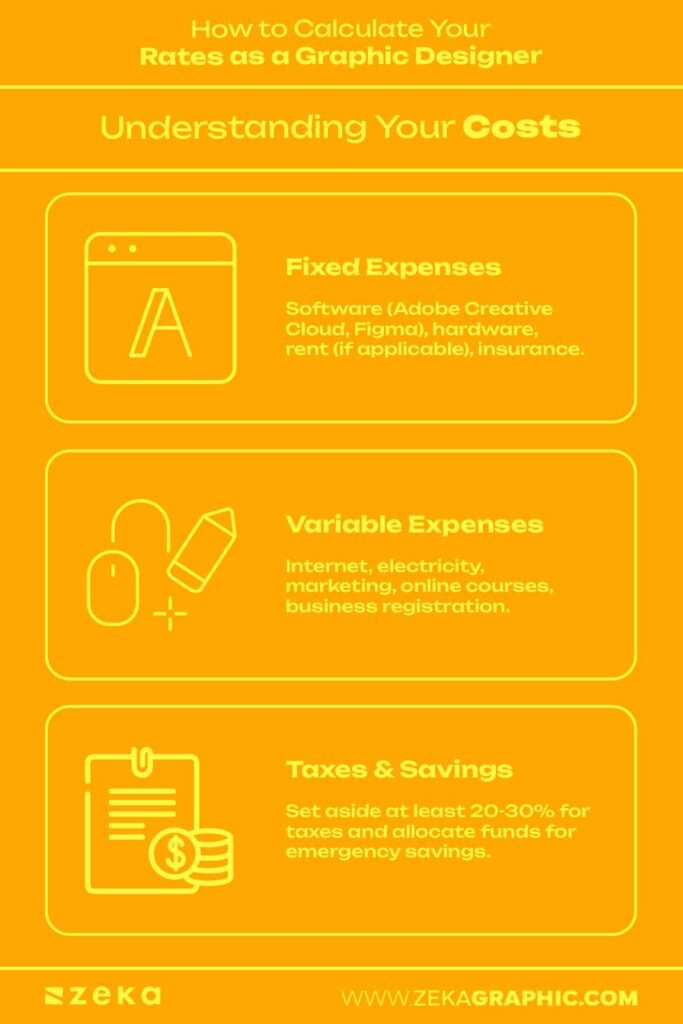
    • Software-heavy expenses

    Without budgeting, money disappears fast and taxes become unpredictable.

    A tax-saving budget helps you:

    • Reduce taxable income legally
    • Track deductible expenses
    • Improve cash flow stability
    • Stay compliant with FBR regulations

    FBR Context (2025-2026): Why Budgeting Impacts Your Taxes

    FBR doesn’t just tax income—it looks at:

    • Consistency of income
    • Bank transaction patterns
    • Declared business expenses

    If your financial records are messy, you end up:

    • Overpaying tax
    • Missing deductions
    • Facing audit risk

    So budgeting is not just finance—it’s tax protection.

    Key Tax Slabs for Freelance Designers in Pakistan (2025-2026)

    Understanding tax slabs helps you design your budget better:

    Annual Income (PKR)Tax Rate
    0 – 600,0000%
    600,001 – 1,200,0005%
    1,200,001 – 2,400,00015%
    2,400,001 – 3,600,00025%
    Above 3,600,00030%

    Your goal is simple: reduce taxable income through smart expense planning.

    What Counts as Tax-Deductible Expenses for Graphic Designers

    Before building a budget, you must know what you can legally deduct.

    1. Software Subscriptions

    • Adobe Creative Cloud
    • Figma
    • Canva Pro
    • Stock image platforms

    2. Hardware Costs

    • Laptop depreciation
    • Graphics tablet
    • Monitor and accessories

    3. Internet & Utilities

    • Internet bills
    • Electricity (business portion)

    4. Workspace Costs

    • Rent portion (if applicable)
    • Co-working space fees

    5. Learning & Tools

    • Online courses
    • Design assets
    • Fonts and plugins

    Here is the truth: most designers miss 30–40% of deductible expenses.

    Step-by-Step Guide: How to Create a Tax-Saving Budget as a Graphic Designer

    Now let’s build your system step by step.

    Step 1: Calculate Monthly Income (Net and Gross)

    Start with:

    • Total freelance income (USD + PKR)
    • Platform fees (Upwork, Fiverr)
    • Net earnings after deductions

    This gives you clarity on real income.

    Step 2: Separate Business and Personal Accounts

    Never mix money.

    You should have:

    • Freelance income account
    • Personal spending account
    • Savings/investment account

    This alone reduces financial confusion by 50%.

    Step 3: Categorize Monthly Expenses

    Divide expenses into:

    • Fixed expenses (internet, software)
    • Variable expenses (freelance tools, ads)
    • Business investments (hardware, courses)

    This structure helps during tax filing.

    Step 4: Set Tax Saving Percentage

    A safe rule:

    • 15%–30% of income reserved for tax

    This prevents last-minute panic during filing season.

    Step 5: Track Deductible Expenses Monthly

    Don’t wait for year-end.

    Record:

    • Software subscriptions
    • Equipment purchases
    • Internet bills
    • Electricity (business portion)

    Use Google Sheets or accounting tools.

    Yes, even a simple calculater sheet works fine if used consistently.

    Step 6: Apply Depreciation on Big Assets

    For items like laptops or tablets:

    • Spread cost over 2–3 years
    • Don’t deduct full cost in one year

    This is compliant with FBR expectations.

    Step 7: Build Emergency & Tax Buffer Fund

    Create two savings pools:

    • Emergency fund (3–6 months expenses)
    • Tax reserve fund (annual tax liability)

    This prevents financial stress.

    Step 8: Review Budget Monthly

    At the end of every month:

    • Compare income vs expenses
    • Adjust savings percentage
    • Track tax liability estimate

    Consistency beats perfection.

    Comparison Table: Poor Budget vs Tax-Saving Budget

    FeaturePoor BudgetingTax-Saving Budget
    Income TrackingIrregularMonthly structured
    Expense TrackingMissing recordsFully categorized
    Tax PlanningReactiveProactive
    FBR ComplianceWeakStrong
    Savings GrowthUnstableConsistent

    Common Mistakes Graphic Designers Make

    Here are mistakes I see all the time:

    1. Ignoring Small Expenses

    Fonts, plugins, and tools add up quickly.

    2. Not Tracking USD Income Properly

    Exchange rate inconsistency creates reporting issues.

    3. Mixing Personal Purchases

    Buying personal gadgets under business records causes problems.

    4. No Monthly Review System

    Budgeting without review is just guessing.

    Here is the truth: budgeting is not math—it’s discipline.

    Pro Tip: Use the 50-30-20 Rule for Freelancers

    A simple structure:

    • 50% → Living expenses
    • 30% → Business reinvestment
    • 20% → Tax + savings

    This keeps your freelance finances stable.

    Why Tax-Saving Budgeting Improves Your Income

    When you manage budget properly:

    • You identify wasteful expenses
    • You increase savings rate
    • You reduce taxable income legally
    • You improve financial confidence

    And most importantly—you stop living paycheck to paycheck.

    Real Talk: Why Designers Struggle with Taxes

    Most graphic designers:

    • Focus on creativity, not accounting
    • Earn irregular income
    • Ignore documentation

    But here’s the big brother advice:

    If you treat freelancing like a business, your income starts behaving like a business too.

    Why gigtax.site Recommends Budget Discipline

    At gigtax.site, we believe freelancers should:

    • Earn smarter
    • Track better
    • Save legally

    A tax-saving budget is not about reducing tax illegally—it’s about structuring your finances intelligently.

    Final Thoughts

    Learning how to create a tax-saving budget as a graphic designer is one of the most important financial skills you can develop in Pakistan’s freelance economy.

    If you:

    • Track income properly
    • Categorize expenses
    • Reserve tax funds
    • Plan monthly budgets

    Then tax season becomes smooth—not stressful.

    And honestly, once you build this system, you stop worrying about money and start controlling it.

    CTA: Take Control of Your Freelance Finances

    If you are serious about freelancing in Pakistan, don’t just design—design your financial future too.

    Become a filer, stay on the ATL, and build a tax-efficient financial system today.

    For expert guides, freelancer tax strategies, and financial planning resources, visit gigtax.site—your trusted platform for building long-term financial success in Pakistan’s freelance economy.

  • Managing Co-Working Space Receipts for Tax Deductions (Pakistan 2025-2026 Guide)

    Managing Co-Working Space Receipts for Tax Deductions (Pakistan 2025-2026 Guide)

    Introduction: Why Co-Working Receipts Actually Matter for Freelancers

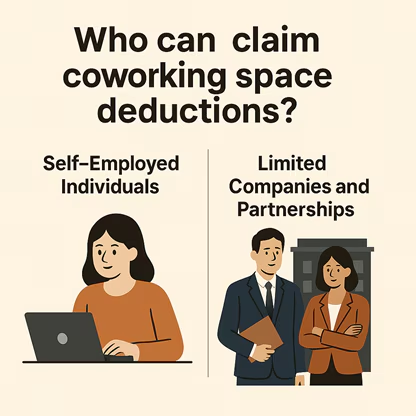
    Look, I get it, taxes are boring but if you’re a freelancer or remote worker in Pakistan, co-working spaces are not just about Wi-Fi and coffee—they are actually a legitimate tax-deductible business expense under FBR rules for Tax Year 2025-2026.

    Here is the real talk: most freelancers pay for co-working spaces every month but completely fail to properly document receipts. That means they lose out on legal tax savings every single year.

    At gigtax.site, we see this mistake all the time. People earn well but forget the simplest part—managing co-working space receipts for tax deductions properly.

    Let’s fix that today.

    Why Co-Working Spaces Are Tax-Deductible in Pakistan

    Under FBR guidelines (2025-2026), any expense directly related to earning income can be claimed as a business expense if:

    • It is used for work purposes
    • It is properly documented
    • It is linked to business activity

    Co-working spaces qualify because they provide:

    • Work environment for freelancing
    • Internet and utilities
    • Meeting rooms for clients
    • Business infrastructure

    So yes—your co-working rent is 100% a legitimate deductible expense (if managed correctly).

    FBR Requirements for Claiming Co-Working Expenses

    To avoid issues during tax filing, FBR expects:

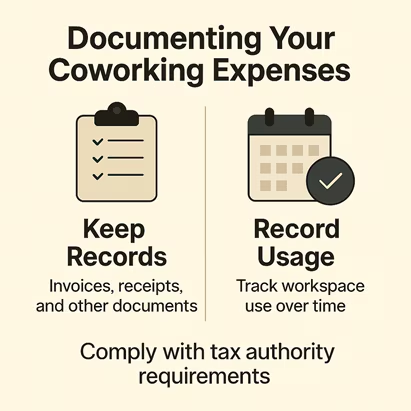
    1. Valid Receipts or Invoices

    Must include:

    • Business name or your name
    • Date of payment
    • Amount paid
    • Service provider details

    2. Proof of Payment

    • Bank transfer proof
    • Online payment record
    • Avoid cash-only undocumented payments

    3. Business Relevance

    You must show:

    • Freelance income activity
    • Use of space for work-related tasks

    Without this, deductions may be questioned.

    Common Types of Co-Working Expenses You Can Claim

    Freelancers in Pakistan can usually claim:

    1. Monthly Membership Fees

    This is the main deductible expense.

    2. Day Passes

    If you use spaces occasionally.

    3. Meeting Room Charges

    Client meetings or presentations.

    4. Additional Services

    • Printing
    • Event space usage
    • Dedicated desk upgrades

    Here is the truth: even small add-ons matter if tracked properly.

    Comparison Table: Proper vs Improper Receipt Management

    CriteriaImproper ManagementProper Management
    ReceiptsMissing or informalDigitally stored invoices
    Tax ClaimRejected or ignoredFully deductible
    Audit RiskHighLow
    Expense TrackingRandomStructured monthly logs
    FBR ComplianceWeakStrong

    Step-by-Step Guide: Managing Co-Working Space Receipts for Tax Deductions

    Now let’s make this practical and simple.

    Step 1: Always Request Proper Invoice

    Never rely on casual receipts.

    Ensure invoice includes:

    • Your name or business identity
    • Co-working space details
    • Payment breakdown
    • GST/NTN details if available

    This is your primary proof.

    Step 2: Use Digital Payments Only

    Always prefer:

    • Bank transfers
    • Debit/credit card payments
    • Digital wallets

    Cash payments create documentation gaps and weakens your claim during audit.

    Step 3: Organize Monthly Receipt Folder

    Create folders like:

    • January 2025 Co-Working
    • February 2025 Co-Working

    Store:

    • PDFs
    • Screenshots
    • Payment confirmations

    This simple habit saves massive headache later.

    Step 4: Record Expense in Monthly Books

    Whether you use:

    • Google Sheets
    • Accounting software
    • Or a basic calculater sheet

    Log:

    • Date
    • Amount
    • Co-working space name
    • Purpose (work, meeting, etc.)

    Consistency matters more than complexity.

    Step 5: Categorize as Business Expense

    When filing taxes:

    • Classify under “Office/Workspace Expense”
    • Ensure it aligns with freelance income

    This is critical for FBR acceptance.

    Step 6: Match Receipts with Bank Statements

    Before filing:

    • Cross-check all payments
    • Ensure no missing entries
    • Fix inconsistencies early

    This step is often ignored and causes filing errors.

    Step 7: Prepare Annual Summary Report

    At year-end:

    • Total co-working expenses
    • Monthly breakdown
    • Supporting documents attached

    This makes tax filing smooth and audit-proof.

    How Co-Working Expenses Reduce Your Tax Liability

    Let’s simplify this:

    If you earn:

    • Rs. 2,000,000 annually

    And co-working expenses are:

    • Rs. 240,000 annually

    Your taxable income reduces to:

    • Rs. 1,760,000

    Now your tax slab changes—and you pay less tax legally.

    That’s why documentation is powerful.

    Pakistan Freelance Tax Slabs (2025-2026)

    Annual Income (PKR)Tax Rate
    0 – 600,0000%
    600,001 – 1,200,0005%
    1,200,001 – 2,400,00015%
    2,400,001 – 3,600,00025%
    Above 3,600,00030%

    Proper expense management can move you into lower taxable brackets.

    Common Mistakes Freelancers Make with Co-Working Receipts

    Let’s fix what most people mess up:

    1. Losing Monthly Receipts

    This is the most common mistake.

    2. Paying in Cash Without Records

    FBR does not accept “trust me bro” accounting.

    3. Mixing Personal Visits with Business Claims

    Only business usage qualifies.

    4. Not Categorizing Expenses Properly

    If your records are messy, deductions become weak.

    Here is the truth: documentation is more important than income sometimes.

    Pro Tip: Build a Co-Working Expense System

    Advanced freelancers do this:

    • Maintain monthly expense tracker
    • Store cloud backups
    • Automate payment reminders
    • Use accounting tools for categorization

    Even simple structure improves tax efficiency.

    Why Managing Receipts Properly Saves You Stress

    When your records are clean:

    • Tax filing becomes faster
    • Refunds or adjustments are easier
    • Audit risk reduces significantly

    And honestly, peace of mind is worth more than small tax savings.

    Real Talk: Why Freelancers Ignore This

    Most freelancers think:

    • “It’s just a small expense”
    • “I’ll manage it later”
    • “Receipts are not important”

    But here is the big brother advice:

    Small receipts build big deductions over time.

    Ignoring them is like throwing money away quietly.

    Why gigtax.site Recommends Structured Expense Tracking

    At gigtax.site, we always focus on one principle:

    Smart freelancers don’t just earn—they document everything that builds wealth.

    Co-working expenses are a perfect example of legal, simple tax optimization that most people ignore.

    Final Thoughts

    Managing co-working space receipts for tax deductions is not complicated—but it requires discipline.

    If you:

    • Collect proper invoices
    • Track payments monthly
    • Categorize expenses correctly
    • Maintain digital records

    Then you can legally reduce taxable income and stay fully compliant with FBR regulations for 2025-2026.

    And once you build this habit, tax season stops being stressful—it becomes predictable.

    CTA: Build Your Smart Freelancer Tax System

    If you’re serious about freelancing in Pakistan, don’t ignore small expenses—they shape your tax outcome.

    Become a filer, stay on the ATL, and build a proper financial documentation system today.

    For expert tax guides, freelancer strategies, and financial planning insights, visit gigtax.site—your trusted platform for building smarter financial habits in Pakistan’s freelance economy.

  • Why Every Freelancer Needs a Separate Business Bank Account (Pakistan 2025-2026 Guide)

    Why Every Freelancer Needs a Separate Business Bank Account (Pakistan 2025-2026 Guide)

    Introduction: The One Financial Mistake Most Freelancers Make

    Look, I get it, taxes are boring but if you are freelancing in Pakistan, mixing personal and business money is one of the fastest ways to create financial confusion and tax headaches.

    Here is the real talk: most freelancers earn well but still struggle during FBR filing season—not because they don’t earn enough, but because they don’t separate their money properly.

    Under Pakistan Tax Year 2025-2026 regulations, financial transparency is becoming more important than ever. FBR relies heavily on banking activity, transaction history, and income patterns.

    That’s why understanding why every freelancer needs a separate business bank account is not just advice—it’s financial survival.

    At gigtax.site, we see this mistake repeatedly, and fixing it alone can improve your entire tax experience.

    Why FBR Cares About Your Bank Account Structure

    FBR doesn’t just look at your declared income—they analyze:

    • Bank transactions
    • Incoming foreign payments
    • Cash flow patterns
    • Expense behavior

    If your personal and business money is mixed, your financial picture becomes unclear.

    This leads to:

    • Higher tax estimation
    • Difficulty proving expenses
    • Audit risk
    • Confusion during filing

    A separate business account solves this instantly.

    What is a Business Bank Account for Freelancers?

    A business bank account is a dedicated account used only for:

    • Freelance income
    • Client payments
    • Business expenses
    • Tax payments

    It separates your:

    • Personal lifestyle spending
    • Professional income flow

    Even if you are a sole freelancer, FBR treats you like a business entity when filing taxes.

    Benefits of Having a Separate Business Bank Account

    Let’s break down real advantages.

    1. Clean Income Tracking

    Every rupee entering your account is business-related.

    No confusion. No mixing. No guessing.

    2. Easier Tax Filing

    When income and expenses are separated:

    • Filing becomes faster
    • Data is accurate
    • Fewer errors occur

    3. Stronger FBR Compliance

    Bank records match your tax return, reducing audit chances.

    4. Better Expense Claiming

    You can clearly prove:

    • Internet bills
    • Software subscriptions
    • Equipment purchases

    5. Professional Image

    Clients trust freelancers with proper banking systems more.

    Here is the truth: it makes you look like a business, not a hobbyist.

    Comparison Table: Personal vs Business Bank Account

    FeaturePersonal AccountBusiness Account
    Income TrackingMixed & unclearFully structured
    Tax FilingConfusingEasy & accurate
    FBR Audit RiskHighLow
    Expense ProofWeakStrong
    Financial PlanningDifficultOrganized
    Professional ImageLowHigh

    Step-by-Step Guide: How to Set Up a Business Bank Account in Pakistan

    Now let’s go practical.

    Step 1: Choose a Bank

    Popular banks for freelancers in Pakistan:

    • HBL
    • Meezan Bank
    • UBL
    • MCB

    Look for:

    • Low maintenance fees
    • Online banking support
    • International payment compatibility

    Step 2: Prepare Required Documents

    Usually required:

    • CNIC
    • NTN (National Tax Number)
    • Proof of freelance income
    • Utility bill (address verification)

    Step 3: Register NTN with FBR

    Before opening account, ensure:

    • You are registered as taxpayer
    • You are on Active Taxpayers List (ATL)

    This is critical for smooth banking compliance.

    Step 4: Open Business Account

    Visit bank or apply online:

    • Select “sole proprietor” or “freelancer” category
    • Submit documents
    • Activate account

    Step 5: Separate Income Flow Immediately

    After setup:

    • Stop receiving freelance income in personal account
    • Redirect all payments to business account

    This step is where discipline matters.

    Step 6: Track Monthly Transactions

    Record:

    • Income received
    • Expenses paid
    • Bank charges
    • Foreign currency conversions

    Even a simple calculater sheet works fine if used consistently.

    Step 7: Reconcile with Tax Records

    Monthly or quarterly:

    • Match bank statements with income records
    • Fix inconsistencies early

    This avoids year-end panic.

    Pakistan Tax Slabs for Freelancers (2025-2026)

    Understanding your income flow helps optimize tax planning:

    Annual Income (PKR)Tax Rate
    0 – 600,0000%
    600,001 – 1,200,0005%
    1,200,001 – 2,400,00015%
    2,400,001 – 3,600,00025%
    Above 3,600,00030%

    Clean banking = accurate tax slab placement.

    Common Mistakes Freelancers Make

    Here are real-world mistakes I see often:

    1. Using One Account for Everything

    This creates chaos during tax filing.

    2. Receiving USD in Personal Account

    Makes FBR reporting complicated.

    3. Not Keeping Bank Statements

    Without records, deductions weaken.

    4. Mixing Family Transactions

    This triggers unnecessary confusion in audits.

    Here is the truth: financial separation is not optional anymore.

    Real Talk: Why Freelancers Avoid Separate Accounts

    Most freelancers think:

    • “It’s extra effort”
    • “I don’t earn enough yet”
    • “I can manage manually”

    But here is the big brother advice:

    If you cannot separate money, you cannot scale income properly.

    A business account is not about formality—it’s about control.

    How a Business Account Helps Tax Savings

    When your finances are structured:

    • You identify deductible expenses easily
    • You reduce taxable income legally
    • You avoid overpaying tax

    For example:

    • Internet bills
    • Co-working spaces
    • Software subscriptions
    • Equipment depreciation

    All become easier to justify.

    Advanced Tip: Use Sub-Categorization Inside Account

    Smart freelancers go further:

    • Income category: Clients / Platforms
    • Expense category: Tools / Utilities / Marketing
    • Savings category: Tax reserve / Emergency fund

    This creates full financial clarity.

    Why gigtax.site Strongly Recommends Separation

    At gigtax.site, we always emphasize one core principle:

    Financial structure creates financial freedom.

    Without separating accounts:

    • You lose visibility
    • You lose tax efficiency
    • You lose financial control

    With separation:

    • Everything becomes measurable
    • Taxes become predictable
    • Growth becomes scalable

    Final Thoughts

    Understanding why every freelancer needs a separate business bank account is one of the most important financial steps in Pakistan’s freelance economy.

    It’s not about complexity—it’s about clarity.

    If you:

    • Separate your income
    • Track your expenses
    • Maintain clean banking records

    Then tax filing becomes simple, accurate, and stress-free.

    And honestly, this one step alone can transform how professionally you operate.

    CTA: Build a Real Freelance Business Structure

    If you are serious about freelancing in Pakistan, stop treating your income like casual cash flow.

    Open a business bank account, stay on the ATL, and build a structured financial system today.

    For expert tax guidance, freelance financial strategies, and compliance support, visit gigtax.site—your trusted platform for building long-term financial success in Pakistan’s freelance economy.