Category: .FBR & Tax Compliance

  • Tax on Fiverr Earnings in Pakistan: Filer vs Non-Filer (Complete 2026 Guide)

    Tax on Fiverr Earnings in Pakistan: Filer vs Non-Filer (Complete 2026 Guide)

    Learn tax on Fiverr earnings in Pakistan: filer vs non-filer comparison, FBR rules, slabs, and savings for freelancers 2026.

    Introduction

    If you’re earning from Fiverr in Pakistan, understanding tax on Fiverr earnings in Pakistan: filer vs non-filer is not just helpful—it’s essential for your financial survival in 2025–2026.

    Look, I get it, taxes are boring but ignoring them when you’re freelancing on Fiverr can quietly cost you a huge portion of your income.

    Here is the real talk: two freelancers earning the same amount can end up paying completely different taxes just because one is a filer and the other is not.

    In this guide by gigtax.site, I’ll break down:

    • How Fiverr income is taxed in Pakistan
    • Difference between filer and non-filer tax rates
    • How to reduce your tax legally

    Let’s simplify it.
    How Fiverr Earnings Are Taxed in Pakistan

    Fiverr income is treated as foreign freelance income (IT export service) if received through proper banking channels like:

    • Payoneer
    • Bank transfers
    • Wise (formerly TransferWise)

    Under FBR rules (2025–2026), Fiverr earnings fall under:

    • Final Tax Regime (FTR) for filers
    • Higher withholding and slab tax for non-filers

    So your tax status matters a lot.

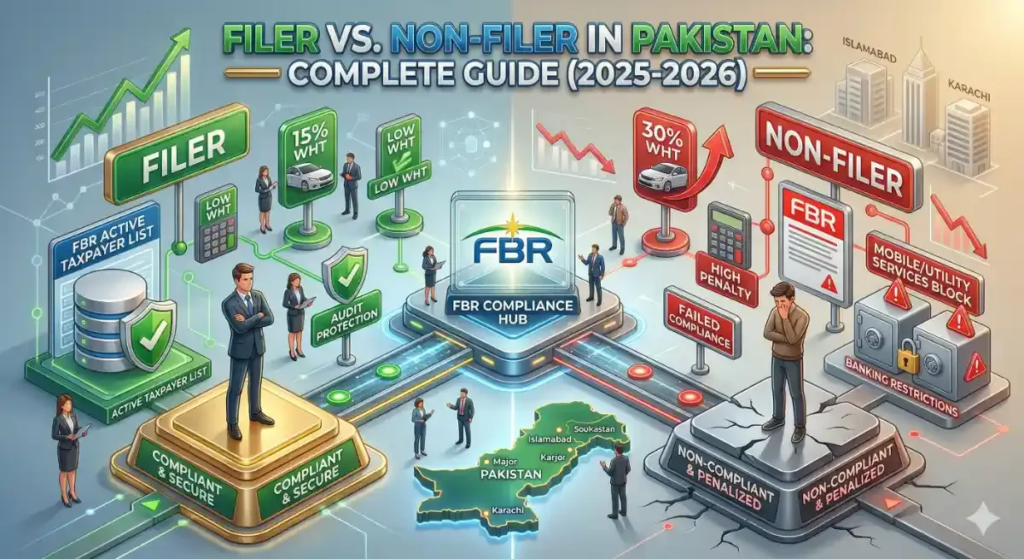
    Filer vs Non-Filer: Key Difference for Fiverr Freelancers

    Comparison Table

    FeatureFiler FreelancerNon-Filer Freelancer
    Tax Rate0.25% – 1%Up to 35%
    FBR StatusActive Taxpayer List (ATL)Non-ATL
    Bank ChargesLowerHigher
    Fiverr Earnings TaxMinimalHeavy deductions
    Financial ReputationStrongWeak

    This difference alone can decide whether freelancing is profitable or stressful.

    Fiverr Tax Rates in Pakistan (2025–2026)

    Let’s break it down clearly.

    1. Filer (Registered Freelancer)

    If you’re a filer:

    • Tax rate: 0.25% – 1%
    • Applies under IT export category
    • Requires NTN + tax return filing

    2. Non-Filer

    If you’re not a filer:

    • Withholding tax increases significantly
    • Income may fall under normal tax slabs (up to 35%)
    • Higher deductions on transactions

    So yes, being a non-filer is expensive.

    Why Filer Status Matters for Fiverr Income

    Here’s the real impact:

    1. Lower Tax Deduction

    Filers pay almost nothing compared to non-filers.

    2. Smooth Bank Transactions

    Non-filers often face:

    • Transaction delays
    • Higher withholding
    • Bank scrutiny

    3. Legal Protection

    Filer status keeps you compliant with FBR.

    4. Visa & Loan Benefits

    Being in ATL improves financial credibility.

    Step-by-Step: How Fiverr Income is Taxed in Pakistan

    Alright, let’s break this proccess down.

    Step 1: Receive Fiverr Income

    • Earnings go to Fiverr
    • Withdraw via Payoneer or bank

    Step 2: Bank Receives Foreign Remittance

    • Classified as export income
    • Reported to FBR automatically

    Step 3: Tax Status Applied

    • Filer → low tax rate applied
    • Non-filer → higher deduction applied

    Step 4: FBR Records Income

    • Bank data is matched with NTN
    • Income is verified

    Step 5: Tax Filing Requirement

    • Annual return must be submitted
    • Income must be declared properly

    Simple, but very important.

    How Much Tax Do Fiverr Freelancers Pay?

    Let’s make it practical.

    Example Scenario:

    • Monthly Fiverr income: 200,000 PKR
    • Annual income: 2,400,000 PKR

    Filer:

    • Tax = ~24,000 PKR (1%)

    Non-Filer:

    • Tax + deductions = 200,000–400,000 PKR

    Massive difference.

    This is why understanding tax on Fiverr earnings in Pakistan: filer vs non-filer is so important.

    Common Mistakes Fiverr Freelancers Make

    Let me save you from costly errors.

    1. Not Registering with FBR

    Many freelancers ignore NTN registration.

    2. Thinking Fiverr Income is Untaxable

    Wrong assumption—FBR tracks bank inflows.

    3. Staying Non-Filer for Years

    This leads to penalties and higher tax.

    4. Mixing Personal & Freelance Income

    Always separate accounts.

    5. Not Filing Returns

    Even if tax is deducted, filing is mandatory.

    How to Become a Filer (Step-by-Step)

    If you’re a Fiverr freelancer, here’s how to fix your status.

    Step 1: Get NTN

    • Register on FBR IRIS
    • Create taxpayer profile

    Step 2: Declare Freelance Income

    • Select IT export services
    • Add Fiverr income details

    Step 3: File Tax Return

    • Submit annual income details
    • Declare foreign earnings

    Step 4: Get ATL Status

    • Once filed, you become active taxpayer
    • Lower tax rates apply

    Step 5: Maintain Compliance

    • File every year
    • Keep records updated

    This is the correct way to operate.

    Why Many Fiverr Freelancers Overpay Tax

    Here is the real talk.

    Most freelancers:

    • Don’t understand FTR system
    • Stay non-filer without realizing cost
    • Ignore IRIS filing

    Result → unnecessary tax loss.

    Benefits of Being a Filer on Fiverr Income

    • Lower tax rates (0.25%–1%)
    • Stable banking transactions
    • No fear of FBR notices
    • Better financial credibility
    • Easier international payments

    Being a filer is not a burden—it’s a financial advantage.

    FBR Monitoring of Fiverr Income in 2026

    In 2026, FBR uses:

    • Bank transaction tracking
    • Digital remittance monitoring
    • AI-based income matching

    So hiding income is not realistic anymore.

    Compliance is the smarter route.

    How gigtax.site Helps Fiverr Freelancers

    At gigtax.site, we help freelancers:

    • Understand Fiverr tax structure
    • Become filers quickly
    • Reduce unnecessary tax payments
    • File accurate returns

    We specialize in Pakistani freelance taxation, not generic accounting.

    Final Thoughts

    Understanding tax on Fiverr earnings in Pakistan: filer vs non-filer is essential if you want to keep more of your income legally.

    Look, I get it, taxes feel complicated at first. But once you understand filer vs non-filer difference, everything becomes clear.

    One decision can save you thousands every month.

    Don’t ignore it.

    Call to Action

    Stop losing money on unnecessary taxes.

    Become a tax filer, join the ATL, and secure your Fiverr income legally and efficiently.

    Visit gigtax.site today and get expert help to optimize your freelance taxes and grow your financial future in Pakistan.

  • How to Reactivate Suspended NTN for Freelancers (Pakistan 2026 Complete Guide)

    How to Reactivate Suspended NTN for Freelancers (Pakistan 2026 Complete Guide)

    Learn how to reactivate suspended NTN for freelancers in Pakistan 2026 with FBR steps, requirements, and compliance fixes.

    Introduction

    If you’re a freelancer in Pakistan and suddenly discover your NTN is suspended, don’t panic—but don’t ignore it either. Understanding how to reactivate suspended NTN for freelancers is critical for staying compliant with FBR in the 2025–2026 tax year.

    Look, I get it, taxes are boring but an inactive or suspended NTN can completely block your financial activity—from tax filing to bank compliance and even international payments.

    Here is the real talk: most freelancers don’t even realize their NTN is suspended until they try to file a return or receive an FBR notice.

    In this guide by gigtax.site, I’ll explain:

    • Why NTN gets suspended
    • How to fix it step by step
    • What documents you need
    • How to avoid future suspension

    Let’s get into it.

    What Does “Suspended NTN” Mean in FBR System?

    A suspended NTN means your tax profile is temporarily inactive in the FBR IRIS system.

    This usually happens when:

    • You haven’t filed tax returns for multiple years
    • Your profile is incomplete or outdated
    • FBR cannot verify your income activity
    • Your registration has compliance issues

    You are still registered—but you are not active.

    Why NTN Suspension Happens for Freelancers

    Freelancers are more vulnerable to suspension because:

    • Irregular income filing
    • Ignoring annual tax returns
    • Missing profile updates
    • No declared business activity
    • Bank mismatch with FBR records

    Even if you’re earning legally, poor compliance can trigger suspension.

    Impact of Suspended NTN on Freelancers

    A suspended NTN can cause serious problems:

    • You cannot file tax returns
    • You may be treated as non-filer
    • Higher withholding taxes apply
    • Bank transactions get flagged
    • Freelance payments may face delays

    Basically, your financial identity becomes “inactive” in FBR’s system.

    Difference Between Active and Suspended NTN

    Comparison Table

    FeatureActive NTNSuspended NTN
    Tax FilingAllowedBlocked or restricted
    ATL StatusPossibleNot possible
    Bank ComplianceSmoothIssues may arise
    Tax Rate0.25% – 1%Higher default rates
    Legal StandingFully compliantNon-compliant flag

    This is why fixing it quickly is important.

    Who Usually Faces NTN Suspension?

    Common cases include:

    • Freelancers on Fiverr/Upwork who stopped filing
    • Individuals with NTN but no tax return history
    • People who registered but never used IRIS
    • Inactive businesses or missing records

    If this sounds familiar, you’re not alone.

    Step-by-Step: How to Reactivate Suspended NTN for Freelancers

    Alright, let’s break down the exact proccess.

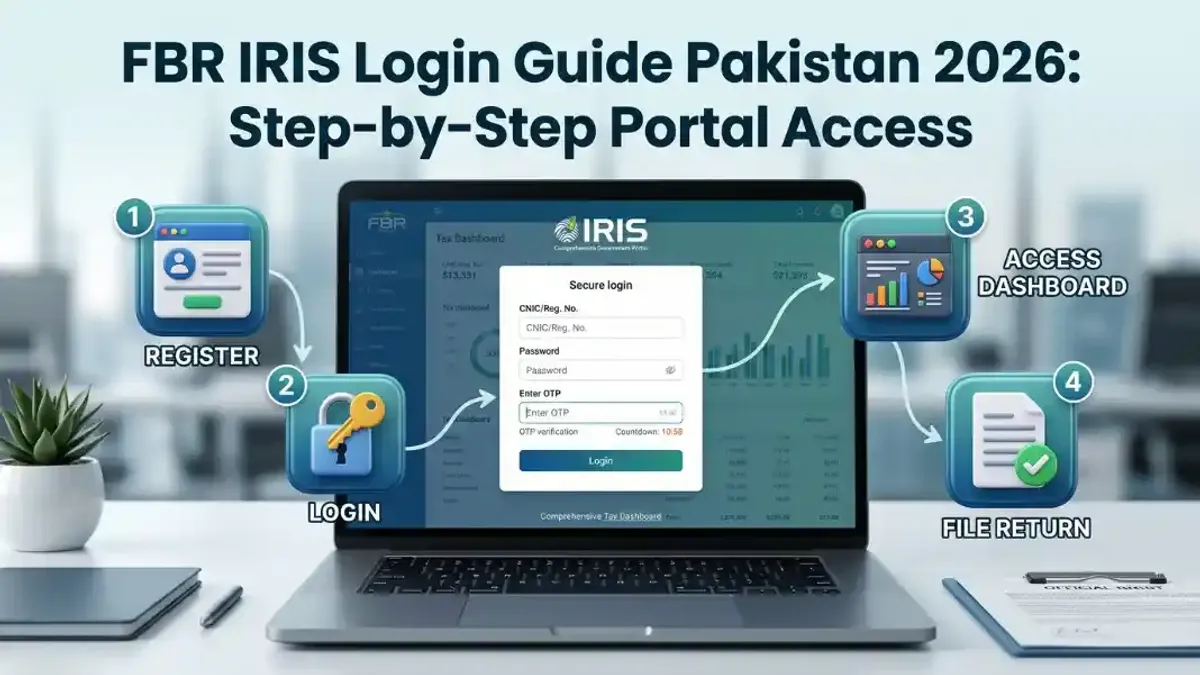
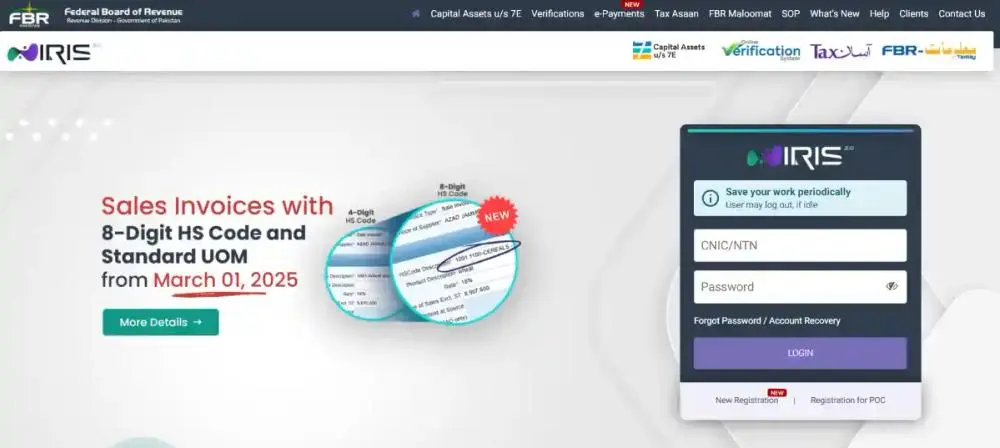
    Step 1: Log into FBR IRIS Portal

    • Go to IRIS login page
    • Enter CNIC and password
    • Access your taxpayer dashboard

    If login works, your NTN still exists.

    Step 2: Check Your NTN Status

    • Go to “Profile Status”
    • Look for Active / Suspended status

    This confirms the issue.

    Step 3: Update Your Profile Information

    You must ensure:

    • Correct mobile number
    • Valid email address
    • Updated residential address
    • Bank account details

    Small mismatch can cause suspension.

    Step 4: Add Freelance Business Activity

    This is very important.

    • Go to Registration (Form 181)
    • Add Freelance / IT Export Services
    • Save and submit changes

    Without this, FBR cannot classify your income.

    Step 5: File Pending Tax Returns

    Most suspensions happen due to missing filings.

    • Select previous tax years
    • File outstanding returns
    • Declare income properly

    Even zero-income returns may be required.

    Step 6: Pay Any Outstanding Tax (if applicable)

    • Check outstanding dues
    • Clear payments via ATM or bank
    • Update FBR records

    Unpaid liabilities keep your NTN inactive.

    Step 7: Request Reactivation (If Required)

    In some cases:

    • Submit a reactivation request
    • Attach updated documents
    • Wait for FBR approval

    This step may take a few days.

    Step 8: Verify NTN Status Again

    • Log back into IRIS
    • Confirm status is now Active

    Once active, you’re fully restored.

    Documents Required for Reactivation

    Keep these ready:

    • CNIC copy
    • NTN details
    • Bank statements (if needed)
    • Previous tax returns
    • Proof of freelance income

    Having clean records speeds up approval.

    Common Mistakes Freelancers Make

    Let me save you from trouble.

    1. Ignoring Suspension Notices

    FBR doesn’t reset status automatically.

    2. Not Filing Old Returns

    Without past returns, reactivation fails.

    3. Incorrect Profile Details

    Even small typos like wrong address can delay approval (yes, it happens more than you think).

    4. Assuming NTN is Automatically Active

    It’s not.

    5. Mixing Personal and Freelance Income

    This confuses FBR systems.

    How Long Does NTN Reactivation Take?

    Typically:

    • Simple cases: 24–72 hours
    • Complex cases: 5–10 working days

    Delays happen when records are incomplete.

    How to Avoid NTN Suspension in Future

    Here’s how to stay safe:

    • File tax returns annually
    • Keep IRIS profile updated
    • Declare freelance income properly
    • Stay in ATL (Active Taxpayer List)
    • Use proper banking channels

    Consistency is key.

    Real Talk: Why Freelancers Ignore This Problem

    Here is the real talk.

    Most freelancers:

    • Don’t check IRIS regularly
    • Think small income doesn’t matter
    • Assume suspension won’t affect them

    But later they face:

    • Bank issues
    • Higher taxes
    • Visa problems

    So prevention is always better.

    Benefits of Reactivating NTN

    Once your NTN is active again:

    • You can file returns normally
    • You regain ATL status eligibility
    • Tax rates reduce significantly
    • Financial credibility improves
    • Freelance payments become smoother

    Basically, your financial identity is restored.

    How gigtax.site Helps Freelancers

    At gigtax.site, we help freelancers:

    • Reactivate suspended NTN
    • Fix FBR profile issues
    • File pending returns
    • Restore ATL status
    • Optimize tax structure

    We specialize in freelance taxation in Pakistan, not generic accounting.

    Final Thoughts

    Understanding how to reactivate suspended NTN for freelancers is essential if you want to keep your freelance income legal and stress-free in Pakistan.

    Look, I get it, FBR systems can feel confusing. But once you follow the steps, it becomes manageable.

    The key is simple: fix it early, stay compliant, and don’t ignore notices.

    Call to Action

    Don’t let a suspended NTN block your freelance income.

    Become a tax filer, restore your ATL status, and reactivate your NTN today.

    Visit gigtax.site for expert help and get your freelance tax profile fixed the right way—fast, simple, and compliant.

  • How to Claim Tax Credit for Foreign Income Exports (Pakistan 2026 Guide)

    How to Claim Tax Credit for Foreign Income Exports (Pakistan 2026 Guide)

    Learn how to claim tax credit for foreign income exports in Pakistan 2026 and reduce your FBR tax legally.

    Introduction

    If you’re earning from international clients, understanding how to claim tax credit for foreign income exports can help you legally reduce your tax burden in Pakistan.

    Look, I get it, taxes are boring but this is one area where a little knowledge can save you serious money.

    Here is the real talk: many freelancers and IT exporters either overpay tax or miss available credits simply because they don’t understand how the system works.

    In this complete guide by gigtax.site, I’ll walk you through:

    • What tax credit on foreign income means
    • Who qualifies for it
    • How to claim it step by step

    Let’s simplify everything.

    What is Tax Credit for Foreign Income Exports?

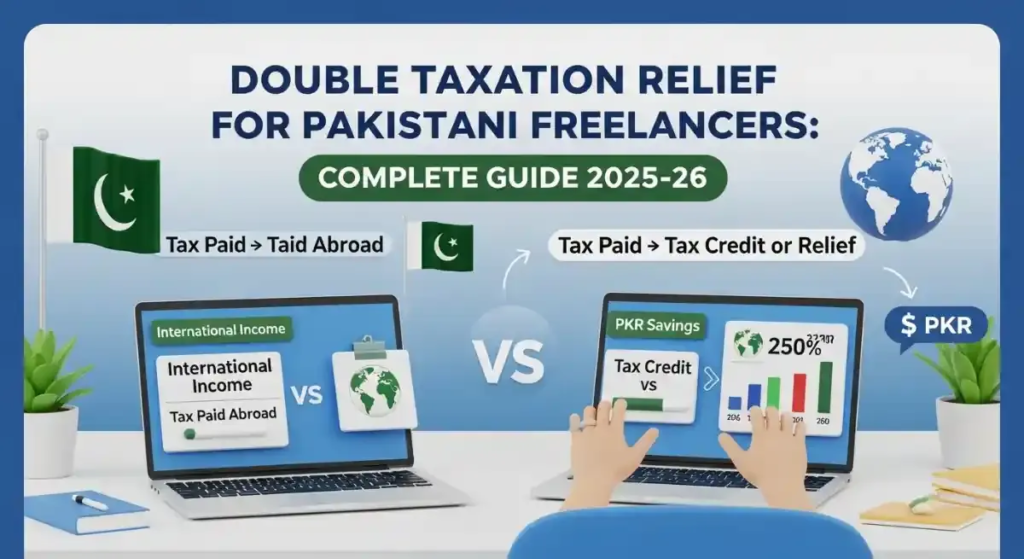
    A tax credit for foreign income exports is a relief mechanism that prevents double taxation.

    It means:

    • If your income is earned abroad
    • And taxed there
    • You can claim credit in Pakistan

    This ensures you don’t pay tax twice on the same income.

    How Foreign Income is Taxed in Pakistan (2025-2026)

    Before claiming credit, you must understand how your income is treated.

    Two Possible Scenarios:

    1. Export of IT Services (Freelancers)

    • Taxed under Final Tax Regime (FTR)
    • Rate: 0.25% – 1%
    • Usually no additional tax credit needed

    2. Foreign Income Taxed Abroad

    • Falls under Normal Tax Regime (NTR)
    • Eligible for foreign tax credit

    This distinction is critical.

    When Can You Claim Tax Credit?

    You can claim tax credit if:

    • Your income is sourced from outside Pakistan
    • Tax has been paid in another country
    • You have proof of tax deduction
    • Income is declared in your FBR return

    If no foreign tax is paid, then technically there is no credit to claim.

    Tax Credit vs Tax Exemption

    Many freelancers confuse these.

    Comparison Table

    FeatureTax CreditTax Exemption
    MeaningReduce tax already paidNo tax applied
    RequirementProof of foreign taxSpecific eligibility
    Applies ToForeign taxed incomeExport income (FTR)
    ComplexityModerateSimple
    Common For FreelancersLess commonVery common

    Most freelancers benefit from tax exemption (FTR) rather than tax credit.

    Example: Understanding Tax Credit

    Let’s say:

    • You earn $10,000 from a US client
    • US tax deducted: $1,000
    • Pakistan tax on same income: PKR equivalent

    You can claim credit for the tax already paid abroad.

    This reduces your payable tax in Pakistan.

    Step-by-Step: How to Claim Tax Credit for Foreign Income Exports

    Alright, let’s break down the exact proccess.

    Step 1: Register with FBR

    • Get your NTN
    • Create IRIS account

    Without this, you can’t file or claim anything.

    Step 2: Declare Foreign Income

    • Log into IRIS
    • Go to income section
    • Add foreign income under appropriate head

    Be accurate with currency conversion.

    Step 3: Provide Proof of Foreign Tax Paid

    You need:

    • Tax deduction certificate
    • Foreign tax statement
    • Withholding proof

    Without proof, FBR won’t allow credit.

    Step 4: Enter Tax Credit Details

    • Navigate to Tax Credits section
    • Select Foreign Tax Credit
    • Enter amount of tax paid abroad

    This is where most people get confused, so take your time.

    Step 5: Calculate Net Tax Payable

    Your tax calculater will automatically adjust:

    • Total tax liability
    • Less foreign tax credit

    Result = Reduced tax payable in Pakistan.

    Step 6: Submit Tax Return

    • Review details
    • Submit return

    Make sure everything matches your documents.

    Documents Required for Tax Credit Claim

    Keep these ready:

    • Foreign tax deduction certificate
    • Bank statements
    • Income invoices
    • Currency conversion details

    Good documentation = smooth approval.

    Common Mistakes Freelancers Make

    Let me help you avoid them.

    1. Claiming Credit Without Paying Foreign Tax

    No tax paid = no credit.

    2. Mixing FTR and Tax Credit

    Export income under FTR usually doesn’t need credit.

    3. Incorrect Currency Conversion

    Always use official exchange rates.

    4. Missing Documentation

    This leads to rejection.

    5. Filing Incorrect Income Category

    This can increase tax instead of reducing it.

    Should Freelancers Claim Tax Credit?

    Here’s honest advice.

    Yes, if:

    • You are taxed abroad
    • You work with foreign companies deducting tax
    • You are under NTR

    No, if:

    • You qualify for IT export FTR
    • No foreign tax is deducted

    Most Pakistani freelancers fall in the second category.

    So don’t overcomplicate it.

    Benefits of Claiming Tax Credit

    • Avoid double taxation
    • Reduce total tax payable
    • Stay compliant with FBR
    • Improve financial accuracy

    It’s a smart move when applicable.

    Real Talk: What Most Freelancers Don’t Understand

    Here is the real talk.

    Many freelancers hear “foreign income” and assume they should claim tax credit.

    But in Pakistan, IT exports already have low tax rates, so tax credit is often unnecessary.

    Understanding this difference can save you from filing mistakes.

    How gigtax.site Helps You Optimize Tax

    At gigtax.site, we help freelancers:

    • Identify correct tax treatment (FTR vs NTR)
    • Claim foreign tax credit properly
    • Avoid double taxation issues
    • File accurate returns

    We make sure you don’t overpay—or underpay.

    Final Thoughts

    Understanding how to claim tax credit for foreign income exports is important—but only if it applies to your situation.

    Look, I get it, tax rules can feel confusing. But once you understand the basics, it becomes manageable.

    Don’t blindly apply strategies—know what works for your income type.

    Because smart tax decisions = more money in your pocket.

    Call to Action

    Don’t risk overpaying taxes or making costly filing mistakes.

    Become a tax filer, join the ATL, and optimize your foreign income the smart way.

    Visit gigtax.site today and get expert guidance tailored for Pakistani freelancers so your income stays protected, compliant, and tax-efficient.

  • Penalty for Non-Filer Freelancers in Pakistan 2026 (Complete FBR Guide)

    Penalty for Non-Filer Freelancers in Pakistan 2026 (Complete FBR Guide)

    Learn the penalty for non-filer freelancers in Pakistan 2026, including fines, higher taxes, and how to avoid FBR issues.

    Introduction

    If you’re a freelancer in Pakistan and still not filing taxes, you need to understand the penalty for non-filer freelancers in Pakistan 2026—because the cost of ignoring FBR is rising fast.

    Look, I get it, taxes are boring but being a non-filer in 2026 is no longer “safe” or “manageable.” It can quietly drain your income through higher taxes, blocked transactions, and even legal notices.

    Here is the real talk: the government isn’t targeting freelancers specifically—but digital income is now heavily tracked through banks and remittance systems.

    In this detailed guide by gigtax.site, I’ll explain:

    • What penalties non-filer freelancers face
    • How much extra tax you actually pay
    • How to fix your status step by step

    Let’s break it down simply.

    Who is a Non-Filer Freelancer?

    A non-filer freelancer is someone who:

    • Earns income through freelancing (Upwork, Fiverr, etc.)
    • Is not registered with FBR, or
    • Has NTN but does not file tax returns

    Even if your tax is already deducted, you are still considered a non-filer if you don’t submit your return.

    Why FBR is Targeting Non-Filers in 2026

    Pakistan’s tax system is evolving.

    Key Changes in 2025-2026:

    • Increased monitoring of bank transactions
    • Integration with foreign remittance data
    • Stricter penalties for non-filers
    • Higher withholding tax rates

    So if your receiving regular foreign income, it’s already visible to FBR.

    Major Penalties for Non-Filer Freelancers in Pakistan 2026

    Let’s get straight to the point.

    1. Higher Withholding Taxes

    Non-filers pay significantly higher tax on:

    • Bank withdrawals
    • Property purchases
    • Vehicle registration

    This can double your tax burden.

    2. Loss of IT Export Tax Benefits

    If you’re a non-filer:

    • You cannot claim 0.25%–1% tax regime
    • Your income may fall under normal slabs (up to 35%)

    This is the biggest financial loss.

    3. Fines for Non-Filing

    FBR may impose penalties such as:

    • Fixed fines for late filing
    • Daily penalties in some cases
    • Additional surcharge on unpaid tax

    4. Legal Notices from FBR

    Freelancers with large transactions may receive:

    • Notice under Section 114 (non-filing)
    • Demand for explanation of income

    Ignoring these notices can escalate the issue.

    5. Banking Restrictions

    Banks may:

    • Flag your account
    • Question large remittances
    • Delay transactions

    This is becoming more common in 2026.

    Filer vs Non-Filer Freelancer

    Comparison Table

    FeatureFiler FreelancerNon-Filer Freelancer
    Tax Rate0.25% – 1%Up to 35%
    ATL StatusYesNo
    Bank TransactionsSmoothMonitored
    Legal RiskLowHigh
    Financial GrowthStableRestricted

    If your serious about freelancing, staying non-filer just doesn’t make sense.

    Real Example: Cost of Being a Non-Filer

    Let’s say:

    • Annual Freelance Income: 3,000,000 PKR

    As a Filer:

    • Tax = ~30,000 PKR (1%)

    As a Non-Filer:

    • Tax under slabs = 300,000+ PKR
    • Additional withholding taxes

    Loss = Huge.

    This is why understanding the penalty for non-filer freelancers in Pakistan 2026 is critical.

    Step-by-Step: How to Become a Filer and Avoid Penalties

    Alright, here’s the good news—you can fix this.

    Step 1: Register for NTN

    • Visit FBR IRIS portal
    • Create account
    • Get NTN

    Step 2: Update Your Profile

    • Add freelance business activity
    • Link bank account

    Step 3: File Your Tax Return

    • Declare your income
    • Select IT Export Services

    Step 4: Pay Any Due Tax

    • Clear outstanding liabilities
    • Avoid future penalties

    Step 5: Get into ATL

    • Once filed, your name appears in ATL
    • You become an active filer

    This proccess is easier than most people think.

    What If You Haven’t Filed for Previous Years?

    Don’t panic.

    You can:

    • File previous returns
    • Pay minimal penalties
    • Regularize your status

    FBR usually allows compliance instead of punishment—if you act early.

    Common Mistakes Non-Filers Make

    Let me help you avoid them.

    1. Thinking Small Income is Safe

    Even small regular income can be tracked.

    2. Ignoring FBR Notices

    This makes things worse.

    3. Delaying Registration

    The longer you wait, the bigger the issue.

    4. Using Informal Payment Channels

    This creates complications later.

    5. Believing “No Tax Needed for Freelancers”

    This is outdated advice.

    Benefits of Becoming a Filer

    Here’s what you gain:

    • Lower taxes
    • Legal protection
    • Smooth financial transactions
    • Better visa approval chances
    • Business credibility

    Being a filer is not a burden—it’s an advantage.

    Real Talk: Should You Worry?

    Here is the real talk.

    If you’re earning regularly and not filing, you should definitely take this seriously.

    But don’t stress.

    The system is actually freelancer-friendly—you just need to follow it correctly.

    How gigtax.site Helps You Fix Non-Filer Issues

    At gigtax.site, we specialize in:

    • Converting non-filers into filers
    • Filing missed tax returns
    • Handling FBR notices
    • Optimizing freelancer tax

    We understand your situation and guide you step by step.

    No confusion, no stress.

    Final Thoughts

    Understanding the penalty for non-filer freelancers in Pakistan 2026 is not about fear—it’s about awareness.

    Look, I get it, taxes feel like a headache. But ignoring them creates bigger problems.

    Start now, fix your status, and move forward with confidence.

    Because once you’re compliant, everything becomes easier.

    Call to Action

    Don’t let penalties eat your hard-earned freelance income.

    Become a tax filer, join the ATL, and protect your financial future today.

    Visit gigtax.site now to get expert help and turn your non-filer status into a smart, compliant setup.

  • How to Add “Freelance” Business Activity in IRIS FBR Portal (Pakistan 2026 Guide)

    How to Add “Freelance” Business Activity in IRIS FBR Portal (Pakistan 2026 Guide)

    Learn how to add “freelance” business activity in IRIS FBR portal in Pakistan 2026 and avoid costly tax mistakes.

    Introduction

    If you’re a freelancer in Pakistan, one of the most important steps in staying tax-compliant is knowing how to add “freelance” business activity in IRIS FBR portal.

    Look, I get it, taxes are boring but this one setting inside your IRIS profile can literally decide whether you pay 1% tax or up to 35%.

    Here is the real talk: many freelancers are already registered with FBR, but they never correctly add their business activity—and that leads to wrong tax treatment, notices, and stress.

    This guide by gigtax.site will walk you through everything step by step so your profile is clean, correct, and optimized for 2025-2026 tax rules.

    What is “Business Activity” in IRIS FBR?

    In the IRIS system, your business activity defines:

    • What type of work you do
    • How your income is classified
    • Which tax rules apply to you

    For freelancers, this should clearly reflect IT export services or freelance services.

    If this is missing or incorrect, FBR may treat your income as normal business income—which means higher taxes.

    Why Adding “Freelance” Activity is Critical

    Let me explain this simply.

    If you don’t add the correct business activity:

    • Your income may fall under Normal Tax Regime (NTR)
    • You could be taxed using slabs up to 35%
    • You may lose eligibility for IT export tax benefits

    But if you do it correctly:

    • You qualify for Final Tax Regime (0.25%–1%)
    • Your filing becomes simpler
    • Your compliance improves

    This is not optional—it’s essential.

    Freelance vs Incorrect Business Activity

    Comparison Table

    FeatureCorrect Freelance ActivityIncorrect/No Activity
    Tax Treatment0.25% – 1% (FTR)Up to 35% (NTR)
    Income ClassificationIT ExportBusiness/Other
    FBR ComplianceStrongWeak
    Audit RiskLowHigh
    Filing AccuracyHighError-prone

    So yes, this one step can change everything.

    When Should You Add Freelance Activity?

    You should update your IRIS profile:

    • After getting NTN
    • Before filing your first return
    • When switching to freelancing
    • If your current activity is incorrect

    Even if you registered years ago, you can still fix it.

    Types of Freelance Activities You Can Add

    When adding business activity, choose the closest match:

    Common Options:

    • Software Development Services
    • IT Consulting
    • Graphic Design Services
    • Digital Marketing Services
    • Content Writing / Copywriting

    The goal is simple: clearly show you are an IT exporter or freelancer.

    Step-by-Step: How to Add “Freelance” Business Activity in IRIS FBR Portal

    Alright, let’s go step by step.

    Step 1: Log in to IRIS Portal

    • Visit IRIS FBR portal
    • Enter CNIC and password

    Access your dashboard.

    Step 2: Open Registration Form (Form 181)

    • Go to “Registration”
    • Click “Registration Form (181)”
    • Select “Edit”

    This is where your business details live.

    Step 3: Navigate to Business Tab

    Inside Form 181:

    • Find the Business section
    • Click “Add Business”

    Now you’re ready to enter details.

    Step 4: Add Business Details

    Fill in:

    • Business Name → Your name or brand name
    • Business Type → Sole Proprietor
    • Nature of Business → Select relevant freelance category

    Example:

    • “Software Development Services”
    • “IT Export Services”

    Choose carefully—this impacts your tax.

    Step 5: Add Business Address

    • Use your home address
    • Ensure it matches your CNIC or utility bill

    No need for office space.

    Step 6: Save and Submit

    • Review all details
    • Submit form

    Your business activity will be updated after approval.

    Step 7: Verify Update

    • Check your profile
    • Confirm business activity is added

    Now your account is properly configured.

    This whole proccess usually takes less than 30 minutes.

    What Happens After Adding Freelance Activity?

    Once added:

    • Your income can be declared as IT export
    • You qualify for low tax rates
    • Your tax returns become accurate

    This small step unlocks major benefits.

    Common Mistakes Freelancers Make

    Let me save you from real issues.

    1. Leaving Business Activity Blank

    This is surprisingly common.

    2. Selecting Wrong Category

    Choosing “Retail” or “Trading” is a big mistake.

    3. Not Updating Old Profiles

    Old NTN holders often forget to update.

    4. Ignoring After Registration

    Many people register and never review their profile again.

    5. Filing Without Fixing Activity

    This leads to incorrect tax calculation.

    If your profile is wrong, your entire tax structure is wrong.

    How This Affects Your Tax Filing

    Here’s the connection.

    When you file tax return:

    • IRIS uses your business activity
    • Determines tax regime
    • Calculates tax

    If activity = IT export → low tax
    If activity = generic business → high tax

    That’s why this step is critical.

    Step-by-Step: How to Use This in Tax Filing

    After adding business activity:

    Step 1: Log into IRIS

    Step 2: Open Tax Return

    Step 3: Declare Income under IT Export

    Step 4: Apply Final Tax Regime

    Step 5: Submit Return

    Simple, but only works if your profile is correct.

    Benefits of Proper Freelance Activity Setup

    • Lower tax (0.25%–1%)
    • Better compliance
    • Reduced audit risk
    • Smooth banking transactions
    • Strong financial record

    This is how professionals operate.

    Real Talk: Why Most Freelancers Get This Wrong

    Here is the real talk.

    Most freelancers:

    • Rush through registration
    • Don’t understand tax categories
    • Copy random YouTube tutorials

    And end up paying more tax or getting notices.

    Don’t do that.

    Take your time and do it right.

    How gigtax.site Helps You Fix This

    At gigtax.site, we help freelancers:

    • Add correct business activity
    • Fix IRIS profile errors
    • File tax returns properly
    • Optimize tax structure

    We make sure your setup is aligned with FBR rules.

    Because small mistakes here can cost big money later.

    Final Thoughts

    Understanding how to add “freelance” business activity in IRIS FBR portal is one of the most overlooked—but most important—steps for freelancers in Pakistan.

    Look, I get it, this may seem like a small detail. But in tax matters, small details make a huge difference.

    Fix your profile, file correctly, and stay compliant.

    Your future self will thank you.

    Call to Action

    Don’t risk paying higher taxes due to a simple setup mistake.

    Become a tax filer, get into the ATL, and ensure your freelance income is properly structured.

    Visit gigtax.site today and get expert help to set up your IRIS profile, file taxes correctly, and grow your freelance income the smart way.

  • FBR Tax Slabs for Freelance Income in Pakistan 2025-26 (Complete Guide)

    FBR Tax Slabs for Freelance Income in Pakistan 2025-26 (Complete Guide)

    Meta Description: Explore FBR tax slabs for freelance income in Pakistan 2025-26 and learn how freelancers can reduce taxes legally.

    Introduction

    If you’re earning online through freelancing, understanding the FBR tax slabs for freelance income in Pakistan 2025-26 is one of the most important things you can do for your financial future.

    Look, I get it, taxes are boring but ignoring how tax slabs work can cost you a serious chunk of your income.

    Here is the real talk: most freelancers in Pakistan don’t even realize they might be paying more tax than required—or sometimes less and risking penalties.

    In this guide by gigtax.site, I’ll break down:

    • The latest FBR tax slabs for 2025-26
    • How freelance income is taxed
    • How to legally reduce your tax

    Let’s make it simple.

    How Freelance Income is Taxed in Pakistan

    Before we jump into slabs, you need to understand one key concept.

    Freelance income can be taxed in two different ways:

    1. Final Tax Regime (FTR)

    • Applies to IT exports / foreign clients
    • Tax rate: 0.25% to 1%
    • Very simple
    • No detailed expense tracking needed

    2. Normal Tax Regime (NTR)

    • Applies when income is:
      • Local (within Pakistan)
      • Not properly declared as export
    • Taxed using FBR tax slabs

    This is where things get expensive.

    FBR Tax Slabs for Freelance Income in Pakistan 2025-26

    If your freelance income falls under Normal Tax Regime, these are the official slabs:

    Tax Slab Table (Individual – 2025-26)

    Annual Income (PKR)Tax Rate
    Up to 600,0000%
    600,001 – 1,200,0002.5%
    1,200,001 – 2,200,00012.5%
    2,200,001 – 3,200,00020%
    3,200,001 – 4,100,00025%
    Above 4,100,00035%

    These are progressive slabs, meaning higher income = higher tax rate.

    Example: How Tax Slabs Work for Freelancers

    Let’s break this down with a real-world example.

    Scenario:

    • Annual Freelance Income: 3,000,000 PKR
    • Tax under NTR:

    You don’t pay 20% on full income—only on the portion within that slab.

    Estimated tax could be around 350,000+ PKR depending on calculations.

    Now compare that with FTR:

    • 1% tax = 30,000 PKR

    Huge difference.

    This is why understanding FBR tax slabs for freelance income in Pakistan 2025-26 is critical.

    FTR vs NTR: Which One Should Freelancers Choose?

    Comparison Table

    FeatureFinal Tax Regime (FTR)Normal Tax Regime (NTR)
    Tax Rate0.25% – 1%Up to 35%
    ComplexitySimpleComplex
    Record KeepingMinimalDetailed
    Best ForExport FreelancersLocal Income
    Risk LevelLowHigher

    If you’re working with international clients, always aim for FTR.

    Who Falls Under Tax Slabs?

    You will be taxed under slabs if:

    • You work with local Pakistani clients
    • You don’t declare income as export
    • You receive payments in cash or informal channels
    • You file incorrectly

    Many freelancers unknowingly fall into this category.

    Step-by-Step: How to Apply Correct Tax Treatment

    Alright, here’s how to avoid high tax slabs and stay compliant.

    Step 1: Register with FBR

    • Get your NTN
    • Create IRIS account

    Step 2: Identify Your Income Type

    • Foreign clients → Export income
    • Local clients → Normal income

    This step is crucial.

    Step 3: Use Proper Banking Channels

    • Receive payments via bank, Payoneer, Wise
    • Avoid informal transfers

    Step 4: File Tax Return Correctly

    • Select “IT Export Services” for foreign income
    • Apply FTR

    Wrong selection can push you into high slabs.

    Step 5: Maintain Records

    • Income proof
    • Bank statements
    • Expense details (if needed)

    Step 6: Stay in ATL

    • File on time
    • Keep compliance clean

    This entire proccess is simpler than most freelancers think.

    Common Mistakes Freelancers Make

    Let me save you from costly errors.

    1. Ignoring Tax Slabs

    Many freelancers don’t even know these exist.

    2. Filing Under Wrong Category

    This can increase tax from 1% to 35%.

    3. Mixing Local and Foreign Income

    This complicates tax treatment.

    4. Not Filing Returns

    Even if tax is deducted, filing is mandatory.

    5. Delaying Tax Registration

    Late start = more problems.

    How to Legally Reduce Tax as a Freelancer

    Here’s the smart approach.

    Tips:

    • Always declare foreign income as export
    • Use proper remittance channels
    • Consider PSEB registration for lower rate (0.25%)
    • File on time
    • Keep documentation clean

    If done right, your tax remains minimal.

    Real Talk: Why This Matters in 2026

    FBR is becoming stricter with:

    • Bank transaction monitoring
    • Foreign remittance tracking
    • Non-filer penalties

    So if your still ignoring taxes, it’s not a safe strategy anymore.

    Benefits of Understanding Tax Slabs

    • Avoid overpaying tax
    • Stay compliant with FBR
    • Build financial credibility
    • Prepare for future business growth

    Freelancing is a business—and businesses need structure.

    How gigtax.site Helps Freelancers

    At gigtax.site, we specialize in:

    • Freelancer tax filing
    • Income classification
    • Tax slab optimization
    • ATL registration

    We help you avoid unnecessary taxes and stay fully compliant.

    Final Thoughts

    Understanding FBR tax slabs for freelance income in Pakistan 2025-26 is not just about compliance—it’s about keeping more of your hard-earned money.

    Look, I get it, taxes can feel confusing. But once you understand the system, it becomes manageable.

    The key is to act early and stay consistent.

    Don’t let confusion push you into higher tax brackets.

    Call to Action

    Take control of your freelance income today.

    Become a tax filer, secure your place in the ATL, and avoid unnecessary high tax slabs.

    Visit gigtax.site now to get expert guidance and make sure your taxes are handled the smart way.

  • How to Download a Tax Clearance Certificate for Freelance Visa (Pakistan 2026 Guide)

    How to Download a Tax Clearance Certificate for Freelance Visa (Pakistan 2026 Guide)

    Meta Description: Learn how to download a tax clearance certificate for freelance visa in Pakistan 2026 with this step-by-step FBR guide.

    Introduction

    If you’re planning to apply for a freelance or digital nomad visa abroad, one document you simply can’t ignore is the Tax Clearance Certificate (TCC).

    Understanding how to download a tax clearance certificate for freelance visa in Pakistan is critical—especially in the 2025–2026 tax year, where embassies and immigration departments are getting stricter about financial proof.

    Look, I get it, taxes are boring but this one document can literally decide whether your visa gets approved or rejected.

    Here is the real talk: if your tax record is clean and you’ve filed properly with the Federal Board of Revenue (FBR), getting your TCC is actually quite simple.

    This guide by gigtax.site will walk you through everything step by step.

    What is a Tax Clearance Certificate (TCC)?

    A Tax Clearance Certificate (TCC) is an official document issued by FBR confirming that:

    • You have filed your tax returns
    • You have no outstanding tax liabilities
    • You are a compliant taxpayer

    For freelancers, this is often required when applying for:

    • Freelance visas (UAE, Germany, Portugal, etc.)
    • Residency permits
    • International bank verifications

    Think of it as your “financial character certificate.”

    Why Freelancers Need TCC for Visa Applications

    If you’re earning through Upwork, Fiverr, or direct clients, embassies want proof that:

    • Your income is legitimate
    • You pay taxes in your home country
    • You are financially stable

    Without a TCC, your application may be questioned or delayed.

    If your not a filer, getting this certificate becomes nearly impossible.

    Eligibility Criteria for Tax Clearance Certificate (2025-2026)

    Before applying, make sure you meet these conditions:

    Basic Requirements:

    • Registered with FBR (NTN holder)
    • Filed latest income tax return (2025-2026)
    • No outstanding tax dues
    • Active Taxpayer List (ATL) status

    If any of these are missing, your application may be rejected.

    TCC vs ATL: What’s the Difference?

    Many freelancers confuse these two.

    Comparison Table

    FeatureTax Clearance Certificate (TCC)ATL Status
    PurposeProof of no tax liabilityProof of filer status
    Issued ByFBR (on request)Automatic after filing
    Required ForVisa, immigrationTax benefits
    ValidityTemporaryAnnual
    Application NeededYesNo

    Both are important, but TCC is specifically required for visa purposes.

    Documents Required for TCC Application

    Keep these ready before applying:

    • CNIC
    • NTN
    • Latest tax return acknowledgment
    • Bank statements (optional but helpful)
    • Proof of freelance income

    Having these ready makes the proccess smoother.

    Step-by-Step: How to Download a Tax Clearance Certificate for Freelance Visa

    Alright, let’s go step by step.

    Step 1: Log in to FBR IRIS Portal

    • Visit IRIS portal
    • Enter CNIC and password

    This is your main dashboard.

    Step 2: Ensure Your Tax Filing is Complete

    Before applying:

    • File your latest return
    • Pay any outstanding tax

    Without this, TCC request won’t go through.

    Step 3: Create TCC Request

    • Go to “Applications & Requests”
    • Select “Tax Clearance Certificate”
    • Choose purpose → “Visa / Immigration”

    Make sure you select the correct purpose.

    Step 4: Fill Required Details

    • Mention destination country
    • Provide reason (freelance visa application)
    • Attach supporting documents if required

    Keep your information accurate.

    Step 5: Submit Application

    • Review your details
    • Submit request

    After submission, your application goes to FBR officer for review.

    Step 6: Track Application Status

    • Check status in IRIS
    • Respond to any queries from FBR

    Sometimes they may ask for additional documents.

    Step 7: Download Your TCC

    Once approved:

    • Go to “Completed Applications”
    • Download your Tax Clearance Certificate

    Congrats, your ready for visa submission.

    How Long Does It Take?

    Typically:

    • Processing Time: 3 to 10 working days

    However:

    • If your record is clean → faster
    • If issues exist → delays possible

    So always prepare in advance.

    Common Reasons for TCC Rejection

    Let’s avoid the mistakes most freelancers make.

    1. Not Filing Latest Tax Return

    This is the biggest issue.

    2. Outstanding Tax Liability

    Even small unpaid amounts can block approval.

    3. Incomplete Profile on IRIS

    Missing bank or income details can cause delays.

    4. Mismatch in Income Records

    Declared income must match bank inflows.

    5. Incorrect Application Details

    Wrong visa purpose or country info can lead to rejection.

    Tips to Get TCC Approved Quickly

    Here’s some big brother advice.

    • File taxes early (don’t wait for deadline)
    • Keep your income records clean
    • Maintain ATL status
    • Respond quickly to FBR queries
    • Avoid last-minute applications

    This is not something you want to rush.

    Real Example: Freelancer Applying for UAE Visa

    Let’s say:

    • Freelancer earns via Upwork
    • Files tax under IT export
    • Appears in ATL

    When applying for UAE freelance visa:

    • Submits TCC
    • Shows clean financial record

    Result → Smooth visa approval process.

    Without TCC? Delays or rejection risk increases.

    Benefits of Having a Tax Clearance Certificate

    • Strong visa application
    • Proof of legal income
    • Better financial credibility
    • Peace of mind

    It shows you are a responsible professional—not just earning, but managing money properly.

    How gigtax.site Helps Freelancers

    At gigtax.site, we help freelancers:

    • File income tax returns
    • Fix record discrepancies
    • Apply for Tax Clearance Certificate
    • Prepare financial documents for visa

    We understand both FBR requirements and international visa expectations.

    So you don’t have to figure everything out alone.

    Final Thoughts

    Understanding how to download a tax clearance certificate for freelance visa is a must in 2026 for any serious freelancer in Pakistan.

    Look, I get it, dealing with FBR can feel overwhelming at first. But once your records are clean, the process becomes straightforward.

    Don’t wait until your visa deadline is near.

    Prepare early, file correctly, and stay compliant.

    Call to Action

    Don’t let paperwork delay your international opportunities.

    Become a tax filer, secure your position in the ATL, and get your Tax Clearance Certificate without stress.

    Visit gigtax.site today and get expert help to manage your taxes, prepare your documents, and confidently apply for your freelance visa.

  • Difference Between 0.25% and 1% Tax Rate for IT Exporters (Pakistan 2026 Guide)

    Difference Between 0.25% and 1% Tax Rate for IT Exporters (Pakistan 2026 Guide)

    Meta Description: Learn the difference between 0.25% and 1% tax rate for IT exporters in Pakistan 2026 and how to qualify for lower tax legally.

    Introduction

    If you’re a freelancer or IT exporter in Pakistan, understanding the difference between 0.25% and 1% tax rate for IT exporters can literally save you thousands—sometimes even lakhs—of rupees every year.

    Look, I get it, taxes are boring but this one detail? It actually matters a lot.

    Here is the real talk: both 0.25% and 1% are part of Pakistan’s Final Tax Regime (FTR) for IT exports, but not everyone qualifies for the lower 0.25% rate.

    In this guide by gigtax.site, I’ll break down exactly:

    • Who qualifies for 0.25%
    • Who ends up paying 1%
    • How to legally optimize your tax position

    Let’s make this simple.

    What is the IT Export Tax Regime in Pakistan (2025-2026)?

    Pakistan promotes IT exports by offering extremely low tax rates under FTR.

    Key Highlights:

    • Applies to freelancers and IT companies exporting services
    • Income must come through proper banking channels
    • Tax is considered final (no further tax liability)
    • Rates: 0.25% or 1% depending on compliance

    If you don’t qualify for this regime, your income may be taxed up to 35%.

    Difference Between 0.25% and 1% Tax Rate for IT Exporters

    Let’s get straight to the point.

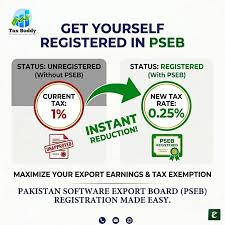
    Comparison Table

    Feature0.25% Tax Rate1% Tax Rate
    EligibilityRegistered with PSEBNot registered with PSEB
    Compliance LevelHighBasic
    Tax SavingsMaximumModerate
    Applicable ToIT companies & some freelancersMost freelancers
    DocumentationMore detailedMinimal
    Government IncentiveYes (special rate)Standard export rate

    So the main difference comes down to one thing:

    👉 PSEB Registration (Pakistan Software Export Board)

    What is PSEB and Why It Matters?

    The Pakistan Software Export Board (PSEB) is a government body that regulates and promotes IT exports.

    If you’re registered with PSEB:

    • You may qualify for 0.25% tax rate
    • You gain credibility as an IT exporter
    • You may access additional incentives

    Without PSEB registration, most freelancers fall into the 1% category.

    Who Qualifies for 0.25% Tax Rate?

    To get the lowest rate, you typically need:

    Requirements:

    • Registered with PSEB
    • Operating as a formal IT business or company
    • Proper documentation of export income
    • Income received via banking channels

    Freelancers can qualify, but it’s less common unless they formalize their setup.

    Who Pays 1% Tax Rate?

    Most freelancers fall here.

    Typical Cases:

    • Individual freelancers (Fiverr, Upwork, etc.)
    • Not registered with PSEB
    • Receiving foreign remittances properly

    And honestly, 1% is still extremely low compared to global tax rates.

    So if your paying 1%, your still in a very good position.

    Example: 0.25% vs 1% Tax Difference

    Let’s make this practical.

    Example Income:

    • Annual Income: 5,000,000 PKR
    Tax RateTax Payable
    0.25%12,500 PKR
    1%50,000 PKR

    Difference = 37,500 PKR saved

    Now imagine this over multiple years.

    Step-by-Step: How to Qualify for 0.25% Tax Rate

    Alright, if you want to level up and reduce your tax, follow this proccess.

    Step 1: Register Your Business

    • Create a sole proprietorship or company
    • Get NTN from FBR

    Step 2: Apply for PSEB Registration

    • Visit PSEB portal
    • Submit business details
    • Provide proof of IT services

    Step 3: Maintain Proper Documentation

    • Export invoices
    • Bank remittance records
    • Client contracts (if available)

    Step 4: File Tax Return Correctly

    • Declare income as IT export services
    • Ensure FTR is applied

    Step 5: Stay Compliant

    • Renew PSEB registration if required
    • Keep records updated

    This is where many freelancers drop off—they start but don’t stay consistent.

    Is It Worth Going from 1% to 0.25%?

    Here’s the honest answer.

    Yes, if:

    • You earn high income (above 2–3 million PKR annually)
    • You plan long-term freelancing or agency work
    • You want a professional business structure

    Maybe not, if:

    • You’re just starting
    • Your income is small
    • You prefer simplicity

    Look, I get it, not everyone wants extra paperwork.

    But if your scaling, it’s worth considering.

    Common Mistakes Freelancers Make

    Let’s avoid costly errors.

    1. Thinking 0.25% is Automatic

    It’s not. You must qualify for it.

    2. Ignoring PSEB Registration

    This is the biggest gap.

    3. Filing Under Wrong Category

    Wrong selection = higher tax.

    4. Not Using Banking Channels

    Cash or informal transfers disqualify you.

    5. Not Filing at All

    This removes you from FTR entirely.

    How FBR Verifies Your Tax Rate

    FBR cross-checks:

    • Bank inflows
    • Declared income
    • Business registration
    • PSEB status (if applicable)

    So don’t try shortcuts. They usually backfire.

    Benefits of Staying in the IT Export Tax Regime

    Whether 0.25% or 1%, you still get:

    • Extremely low tax rates
    • Simplified filing
    • No complex audits (in most cases)
    • Legal protection for your income

    Compared to normal salaried individuals, this is a huge advantage.

    How gigtax.site Helps You Optimize Tax

    At gigtax.site, we specialize in helping freelancers and IT exporters:

    • Understand tax categories
    • Register with PSEB
    • File tax returns correctly
    • Optimize tax from 1% to 0.25% where possible

    We don’t just file your taxes—we help you build a smarter financial structure.

    Final Thoughts

    Understanding the difference between 0.25% and 1% tax rate for IT exporters is one of the most important things for freelancers in Pakistan right now.

    Here is the real talk: both rates are excellent, but if you can legally qualify for 0.25%, it’s worth exploring.

    Don’t overcomplicate it though.

    Start with proper registration, clean income records, and correct tax filing.

    Everything else builds from there.

    Call to Action

    Don’t leave money on the table.

    Become a tax filer, get into the ATL, and optimize your tax the smart way.

    Visit gigtax.site today and get expert guidance tailored for Pakistani freelancers so your income stays protected, compliant, and maximized.

  • Step-by-Step Guide to Filing FBR Income Tax for Upwork Earners (Pakistan 2026)

    Step-by-Step Guide to Filing FBR Income Tax for Upwork Earners (Pakistan 2026)

    Meta Description: Learn the step-by-step guide to filing FBR income tax for Upwork earners in Pakistan 2026 and stay compliant with ease.

    Introduction

    If you’re earning through Upwork in Pakistan, understanding the step-by-step guide to filing FBR income tax for Upwork earners is no longer optional—it’s essential for your financial safety.

    Look, I get it, taxes are boring but ignoring them in 2026 can create serious issues, especially with increased scrutiny by the Federal Board of Revenue (FBR) on foreign remittances.

    Here is the real talk: filing your tax as an Upwork earner is actually simple once you understand the system. And the best part? You may only pay 0.25% to 1% tax if structured correctly.

    This complete guide by gigtax.site will walk you through everything step by step.

    Who Are Considered Upwork Earners in Pakistan?

    Upwork earners include freelancers receiving payments from international clients via:

    • Upwork direct contracts
    • Hourly or fixed-price projects
    • Payments transferred through Payoneer or direct bank

    If your income is coming into Pakistan through official banking channels, it is categorized as export of IT services.

    That’s good news, because export income gets tax benefits.

    Tax Rules for Upwork Earners (2025-2026)

    Pakistan’s tax system encourages freelancers.

    Key Rules You Must Know:

    • IT export income is taxed under Final Tax Regime (FTR)
    • Tax rate ranges from 0.25% to 1%
    • Must receive income through proper banking channels
    • Must file annual income tax return
    • Must register with FBR (NTN required)

    If you skip filing, your income may fall under normal tax slabs—which go up to 35%. Not fun.

    Final Tax Regime vs Normal Tax Regime

    Comparison Table

    FeatureFinal Tax Regime (FTR)Normal Tax Regime
    Tax Rate0.25% – 1%Up to 35%
    ComplexitySimpleComplex
    Record KeepingMinimalDetailed
    Best ForUpwork FreelancersLocal Businesses
    Audit RiskLowHigher

    Always aim to qualify for FTR—this is where freelancers save the most money.

    Documents Required Before Filing

    Before you begin, keep these ready:

    • CNIC
    • NTN (National Tax Number)
    • Upwork earning history
    • Payoneer/Wise statements
    • Bank account details
    • Internet/electricity bills (optional for expense proof)

    Don’t worry, you don’t need advanced accounting. Just basic records.

    Step-by-Step Guide to Filing FBR Income Tax for Upwork Earners

    Alright, let’s break down the exact proccess.

    Step 1: Register on FBR IRIS Portal

    • Visit IRIS portal
    • Click “Registration for Unregistered Person”
    • Create your account
    • Get your NTN

    If you already have NTN, skip this step.

    Step 2: Log into Your IRIS Account

    • Enter CNIC and password
    • Access your taxpayer dashboard

    This is where everything happens.

    Step 3: Open Income Tax Return Form

    • Select “Income Tax Return”
    • Choose tax year 2025-2026

    Make sure you pick the correct year.

    Step 4: Declare Your Income

    This is the most important part.

    Under income section:

    • Select “Foreign Income / IT Export Services”
    • Enter total Upwork earnings for the year

    Use your Upwork reports or Payoneer statements as reference.

    Step 5: Apply Final Tax Regime

    Ensure your income is declared under:

    • Export of Services

    This ensures you get the reduced tax rate.

    If you select wrong category, your tax calculater will shoot up drastically.

    Step 6: Declare Bank Accounts

    • Add your bank account
    • Mention remittance details

    FBR cross-checks this data, so keep it accurate.

    Step 7: Declare Expenses (Optional)

    You can include:

    • Internet bills
    • Software subscriptions
    • Workspace expenses

    Not mandatory under FTR, but still useful.

    Step 8: Wealth Statement

    This part confuses most freelancers.

    You need to declare:

    • Assets (bank balance, cash)
    • Liabilities (if any)

    Basically, explain how your income changed your financial position.

    Step 9: Review and Submit

    • Double-check all entries
    • Submit return

    Once submitted, you’re officially compliant.

    How Much Tax Do Upwork Earners Pay?

    Let’s simplify with an example.

    Example:

    • Annual Income: 2,000,000 PKR
    • Tax Rate (FTR): 1%

    Tax Payable = 20,000 PKR

    Now compare that with normal tax slab:

    • Could go up to 250,000+ PKR

    Huge difference.

    Common Mistakes Upwork Freelancers Make

    Let me save you from real headaches.

    1. Not Filing Tax Returns

    Even if tax is deducted, filing is mandatory.

    2. Selecting Wrong Income Category

    This is the #1 mistake.

    3. Ignoring Wealth Statement

    Many freelancers skip this and get notices.

    4. Mixing Personal and Business Income

    Keep things clean.

    5. Filing Late

    Late filing removes you from ATL.

    Benefits of Filing Tax for Upwork Income

    Here’s why it’s worth it:

    • Lower taxes (0.25%–1%)
    • Smooth banking transactions
    • No fear of FBR notices
    • Eligibility for ATL
    • Easier visa and financial documentation

    If your serious about freelancing, tax compliance is part of the game.

    ATL (Active Taxpayer List) – Why It Matters

    Once you file your return:

    • Your name appears in ATL
    • You get reduced withholding taxes
    • Your financial credibility improves

    Non-filers pay double taxes in many cases.

    How gigtax.site Helps Upwork Earners

    At gigtax.site, we specialize in freelancers like you.

    We help with:

    • NTN registration
    • Income tax filing
    • Wealth statement preparation
    • Tax planning for IT exports

    We understand how Upwork payments work, so you don’t have to figure it out alone.

    Final Thoughts

    The step-by-step guide to filing FBR income tax for Upwork earners may seem overwhelming at first, but once you go through it, it becomes routine.

    Look, I get it, nobody enjoys dealing with taxes. But ignoring them is a costly mistake.

    Start simple. Register. File. Stay consistent.

    Your future self will thank you.

    Call to Action

    Don’t wait for problems to appear.

    Become a tax filer, secure your place in the ATL, and take control of your freelance income today.

    Visit gigtax.site now to get expert help and make sure your Upwork earnings stay safe, legal, and optimized for growth.

  • How to Register for NTN as a Freelancer in Pakistan 2026 (Complete FBR Guide)

    How to Register for NTN as a Freelancer in Pakistan 2026 (Complete FBR Guide)

    Meta Description: Learn how to register for NTN as a freelancer in Pakistan 2026 with this step-by-step FBR guide for tax filing and compliance.

    Introduction

    If you’re earning online through freelancing platforms or international clients, the first serious step toward financial legitimacy is learning how to register for NTN as a freelancer in Pakistan 2026.

    Look, I get it, taxes are boring but avoiding them in 2026 is not a smart move—especially with the Federal Board of Revenue (FBR) tightening compliance checks on digital income.

    Here is the real talk: getting your NTN (National Tax Number) is not complicated, and once you have it, you unlock lower taxes, smoother banking, and zero stress when large payments hit your account.

    This guide by gigtax.site will walk you through everything in a simple, practical way.

    What is NTN and Why Freelancers Need It?

    Understanding NTN in Pakistan

    NTN (National Tax Number) is your unique identification number issued by FBR when you register as a taxpayer.

    For freelancers, it means:

    • You are officially recognized by FBR
    • You can file income tax returns
    • You qualify for Active Taxpayer List (ATL)

    Without NTN, your income may be treated as undocumented, which can cause serious issues.

    Why NTN is Mandatory for Freelancers in 2026

    With the growth of Pakistan’s freelance economy, FBR now closely monitors foreign remittances.

    If you’re receiving payments via:

    • Payoneer
    • Wise
    • Direct bank transfer

    Then yes, you need NTN.

    Otherwise, your account activity may trigger compliance notices.

    Freelancer vs Non-Filer: What’s the Difference?

    Here’s a simple comparison to understand why NTN matters.

    Comparison Table

    FeatureFreelancer with NTN (Filer)Without NTN (Non-Filer)
    Legal StatusRegistered with FBRUnregistered
    Tax Rate0.25% – 1% (IT exports)Up to 35%
    Bank TransactionsSmoothHigh scrutiny
    ATL StatusIncludedNot included
    Property PurchaseEasierExpensive (higher tax)

    If your serious about freelancing long-term, staying non-filer is just not worth it.

    Who Should Register for NTN?

    You should register if you are:

    • A Fiverr, Upwork, or Freelancer.com seller
    • A remote employee working for foreign clients
    • A digital service provider (developer, designer, writer)
    • An Amazon VA or eCommerce consultant

    Even if your income is small right now, start early. Trust me, it saves headaches later.

    Documents Required for NTN Registration

    Before starting the process, keep these ready:

    • Valid CNIC
    • Active mobile number (registered on your CNIC)
    • Email address
    • Bank account details
    • Utility bill (for address verification)

    That’s it. No complex paperwork.

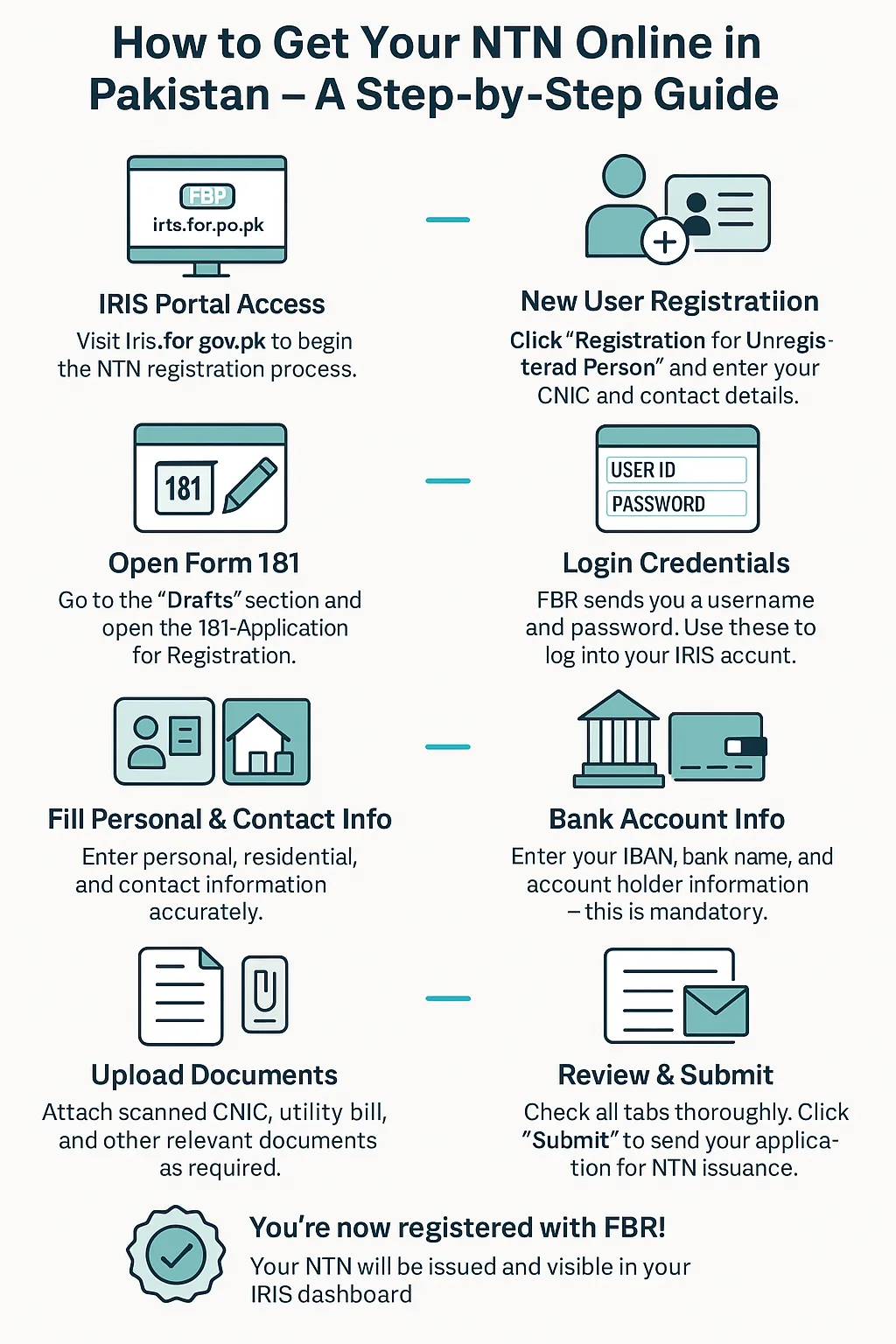
    Step-by-Step: How to Register for NTN as a Freelancer in Pakistan 2026

    Alright, let’s break this down into simple steps.

    Step 1: Visit FBR IRIS Portal

    Go to the official FBR IRIS system.

    Click on “Registration for Unregistered Person.”

    Step 2: Create Your Account

    • Enter CNIC number
    • Add mobile number and email
    • Receive verification codes

    Make sure your details are correct—this is important.

    Step 3: Fill the Registration Form

    You will see Form 181.

    Enter:

    • Personal details
    • Business type → Select “Freelancer / IT Export Services”
    • Income source

    This step is where many people mess up, so take your time.

    Step 4: Provide Business Details

    Even if you’re working from home:

    • Use your residential address
    • Mention nature of work (e.g., “Software Development Services”)

    Step 5: Link Your Bank Account

    Add your bank account used for freelancing income.

    This helps FBR track your foreign remittances properly.

    Step 6: Submit Application

    Once everything is filled:

    • Review carefully
    • Submit the form

    Your NTN is usually issued within a few hours or 1–2 days.

    Congrats, your now officially part of Pakistan’s tax system.

    What Happens After NTN Registration?

    Getting NTN is just the beginning.

    Next Steps:

    • File your annual tax return
    • Declare your freelance income
    • Maintain basic transaction records
    • Ensure your name appears in ATL

    Many freelancers stop after NTN, which is a mistake.

    Tax Benefits for Registered Freelancers

    Pakistan offers strong incentives for IT exports.

    Key Benefits:

    • Low tax rate (0.25% – 1%)
    • No complex audit requirements (if properly declared)
    • Smooth foreign remittance inflows
    • Recognition as a legal taxpayer

    This is why smart freelancers register early.

    Common Mistakes to Avoid

    Let me save you from some real-world mistakes.

    1. Choosing Wrong Business Category

    If you don’t select IT export, your tax may jump to 35%.

    2. Not Linking Bank Account

    Unlinked accounts can cause discrepancies.

    3. Ignoring Tax Filing After NTN

    NTN alone is useless without filing returns.

    4. Providing Incorrect Information

    Even small errors can delay approval.

    5. Delaying Registration

    The longer you wait, the more complicated things get.

    NTN vs STRN: Do Freelancers Need Both?

    Good question.

    • NTN = Income Tax registration
    • STRN = Sales Tax registration

    For Freelancers:

    • NTN → Required
    • STRN → Usually not required for IT exports

    Unless you’re selling locally or dealing with goods, NTN is enough.

    How gigtax.site Helps Freelancers

    At gigtax.site, we specialize in helping Pakistani freelancers navigate tax complexities.

    We provide:

    • NTN registration assistance
    • Income tax filing
    • ATL activation
    • Personalized tax planning

    We understand freelancing income structures, which typical accountants often don’t.

    Final Thoughts

    Learning how to register for NTN as a freelancer in Pakistan 2026 is one of the smartest financial moves you can make.

    Look, I get it, the process might feel confusing at first. But once you go through it, you’ll realize it’s actually quite simple.

    The biggest problem is overthinking it.

    Start now, stay consistent, and keep your records clean. Your future self will thank you.

    Call to Action

    Don’t wait until FBR sends you a notice.

    Register for your NTN today, become a tax filer, and get listed in the ATL to enjoy lower taxes and financial peace of mind.

    Visit gigtax.site now and get expert help to handle your NTN registration, tax filing, and freelancing finances the right way.