
Meta Description: Learn the difference between 0.25% and 1% tax rate for IT exporters in Pakistan 2026 and how to qualify for lower tax legally.
Introduction
If you’re a freelancer or IT exporter in Pakistan, understanding the difference between 0.25% and 1% tax rate for IT exporters can literally save you thousands—sometimes even lakhs—of rupees every year.
Look, I get it, taxes are boring but this one detail? It actually matters a lot.
Here is the real talk: both 0.25% and 1% are part of Pakistan’s Final Tax Regime (FTR) for IT exports, but not everyone qualifies for the lower 0.25% rate.
In this guide by gigtax.site, I’ll break down exactly:
- Who qualifies for 0.25%
- Who ends up paying 1%
- How to legally optimize your tax position
Let’s make this simple.
What is the IT Export Tax Regime in Pakistan (2025-2026)?
Pakistan promotes IT exports by offering extremely low tax rates under FTR.
Key Highlights:
- Applies to freelancers and IT companies exporting services
- Income must come through proper banking channels
- Tax is considered final (no further tax liability)
- Rates: 0.25% or 1% depending on compliance
If you don’t qualify for this regime, your income may be taxed up to 35%.
Difference Between 0.25% and 1% Tax Rate for IT Exporters
Let’s get straight to the point.
Comparison Table
| Feature | 0.25% Tax Rate | 1% Tax Rate |
|---|---|---|
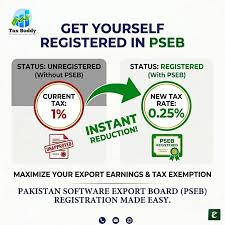
| Eligibility | Registered with PSEB | Not registered with PSEB |
| Compliance Level | High | Basic |
| Tax Savings | Maximum | Moderate |
| Applicable To | IT companies & some freelancers | Most freelancers |
| Documentation | More detailed | Minimal |
| Government Incentive | Yes (special rate) | Standard export rate |
So the main difference comes down to one thing:
👉 PSEB Registration (Pakistan Software Export Board)
What is PSEB and Why It Matters?
The Pakistan Software Export Board (PSEB) is a government body that regulates and promotes IT exports.
If you’re registered with PSEB:
- You may qualify for 0.25% tax rate
- You gain credibility as an IT exporter
- You may access additional incentives
Without PSEB registration, most freelancers fall into the 1% category.
Who Qualifies for 0.25% Tax Rate?
To get the lowest rate, you typically need:
Requirements:
- Registered with PSEB
- Operating as a formal IT business or company
- Proper documentation of export income
- Income received via banking channels
Freelancers can qualify, but it’s less common unless they formalize their setup.
Who Pays 1% Tax Rate?
Most freelancers fall here.
Typical Cases:
- Individual freelancers (Fiverr, Upwork, etc.)
- Not registered with PSEB
- Receiving foreign remittances properly
And honestly, 1% is still extremely low compared to global tax rates.
So if your paying 1%, your still in a very good position.
Example: 0.25% vs 1% Tax Difference
Let’s make this practical.
Example Income:
- Annual Income: 5,000,000 PKR
| Tax Rate | Tax Payable |
|---|---|
| 0.25% | 12,500 PKR |
| 1% | 50,000 PKR |
Difference = 37,500 PKR saved
Now imagine this over multiple years.
Step-by-Step: How to Qualify for 0.25% Tax Rate
Alright, if you want to level up and reduce your tax, follow this proccess.
Step 1: Register Your Business
- Create a sole proprietorship or company
- Get NTN from FBR
Step 2: Apply for PSEB Registration
- Visit PSEB portal
- Submit business details
- Provide proof of IT services
Step 3: Maintain Proper Documentation
- Export invoices
- Bank remittance records
- Client contracts (if available)
Step 4: File Tax Return Correctly
- Declare income as IT export services
- Ensure FTR is applied
Step 5: Stay Compliant
- Renew PSEB registration if required
- Keep records updated
This is where many freelancers drop off—they start but don’t stay consistent.
Is It Worth Going from 1% to 0.25%?
Here’s the honest answer.
Yes, if:
- You earn high income (above 2–3 million PKR annually)
- You plan long-term freelancing or agency work
- You want a professional business structure
Maybe not, if:
- You’re just starting
- Your income is small
- You prefer simplicity
Look, I get it, not everyone wants extra paperwork.
But if your scaling, it’s worth considering.
Common Mistakes Freelancers Make
Let’s avoid costly errors.
1. Thinking 0.25% is Automatic
It’s not. You must qualify for it.
2. Ignoring PSEB Registration
This is the biggest gap.
3. Filing Under Wrong Category
Wrong selection = higher tax.
4. Not Using Banking Channels
Cash or informal transfers disqualify you.
5. Not Filing at All
This removes you from FTR entirely.
How FBR Verifies Your Tax Rate
FBR cross-checks:
- Bank inflows
- Declared income
- Business registration
- PSEB status (if applicable)
So don’t try shortcuts. They usually backfire.
Benefits of Staying in the IT Export Tax Regime
Whether 0.25% or 1%, you still get:
- Extremely low tax rates
- Simplified filing
- No complex audits (in most cases)
- Legal protection for your income
Compared to normal salaried individuals, this is a huge advantage.
How gigtax.site Helps You Optimize Tax
At gigtax.site, we specialize in helping freelancers and IT exporters:
- Understand tax categories
- Register with PSEB
- File tax returns correctly
- Optimize tax from 1% to 0.25% where possible
We don’t just file your taxes—we help you build a smarter financial structure.
Final Thoughts
Understanding the difference between 0.25% and 1% tax rate for IT exporters is one of the most important things for freelancers in Pakistan right now.
Here is the real talk: both rates are excellent, but if you can legally qualify for 0.25%, it’s worth exploring.
Don’t overcomplicate it though.
Start with proper registration, clean income records, and correct tax filing.
Everything else builds from there.
Call to Action
Don’t leave money on the table.
Become a tax filer, get into the ATL, and optimize your tax the smart way.
Visit gigtax.site today and get expert guidance tailored for Pakistani freelancers so your income stays protected, compliant, and maximized.
Leave a Reply