
Introduction: Why Graphic Designers Need a Tax-Saving Budget
Look, I get it, taxes are boring but if you’re a graphic designer in Pakistan working freelance or remote, your income is flexible—but so is your tax responsibility.
Under Pakistan Tax Year 2025-2026 rules from the Federal Board of Revenue (FBR), your taxable income depends heavily on how well you manage your expenses, savings, and financial structure.
Here is the real talk: most designers focus only on earning more, not saving smarter. That’s where tax leakage happens.
If you want to reduce tax legally, increase savings, and avoid last-minute filing stress, you need a proper tax-saving budget system.
And yes, gigtax.site is built exactly to help freelancers like you do this the right way.
Why Tax-Saving Budgeting Matters for Graphic Designers
Graphic designers have unique income patterns:
- Project-based income
- Seasonal high earnings
- International clients (USD income)
- Software-heavy expenses
Without budgeting, money disappears fast and taxes become unpredictable.
A tax-saving budget helps you:
- Reduce taxable income legally
- Track deductible expenses
- Improve cash flow stability
- Stay compliant with FBR regulations
FBR Context (2025-2026): Why Budgeting Impacts Your Taxes
FBR doesn’t just tax income—it looks at:
- Consistency of income
- Bank transaction patterns
- Declared business expenses
If your financial records are messy, you end up:
- Overpaying tax
- Missing deductions
- Facing audit risk
So budgeting is not just finance—it’s tax protection.
Key Tax Slabs for Freelance Designers in Pakistan (2025-2026)
Understanding tax slabs helps you design your budget better:
| Annual Income (PKR) | Tax Rate |
|---|---|
| 0 – 600,000 | 0% |
| 600,001 – 1,200,000 | 5% |
| 1,200,001 – 2,400,000 | 15% |
| 2,400,001 – 3,600,000 | 25% |
| Above 3,600,000 | 30% |
Your goal is simple: reduce taxable income through smart expense planning.
What Counts as Tax-Deductible Expenses for Graphic Designers
Before building a budget, you must know what you can legally deduct.
1. Software Subscriptions
- Adobe Creative Cloud
- Figma
- Canva Pro
- Stock image platforms
2. Hardware Costs
- Laptop depreciation
- Graphics tablet
- Monitor and accessories
3. Internet & Utilities
- Internet bills
- Electricity (business portion)
4. Workspace Costs
- Rent portion (if applicable)
- Co-working space fees
5. Learning & Tools
- Online courses
- Design assets
- Fonts and plugins
Here is the truth: most designers miss 30–40% of deductible expenses.
Step-by-Step Guide: How to Create a Tax-Saving Budget as a Graphic Designer
Now let’s build your system step by step.
Step 1: Calculate Monthly Income (Net and Gross)
Start with:
- Total freelance income (USD + PKR)
- Platform fees (Upwork, Fiverr)
- Net earnings after deductions
This gives you clarity on real income.
Step 2: Separate Business and Personal Accounts
Never mix money.
You should have:
- Freelance income account
- Personal spending account
- Savings/investment account
This alone reduces financial confusion by 50%.
Step 3: Categorize Monthly Expenses
Divide expenses into:
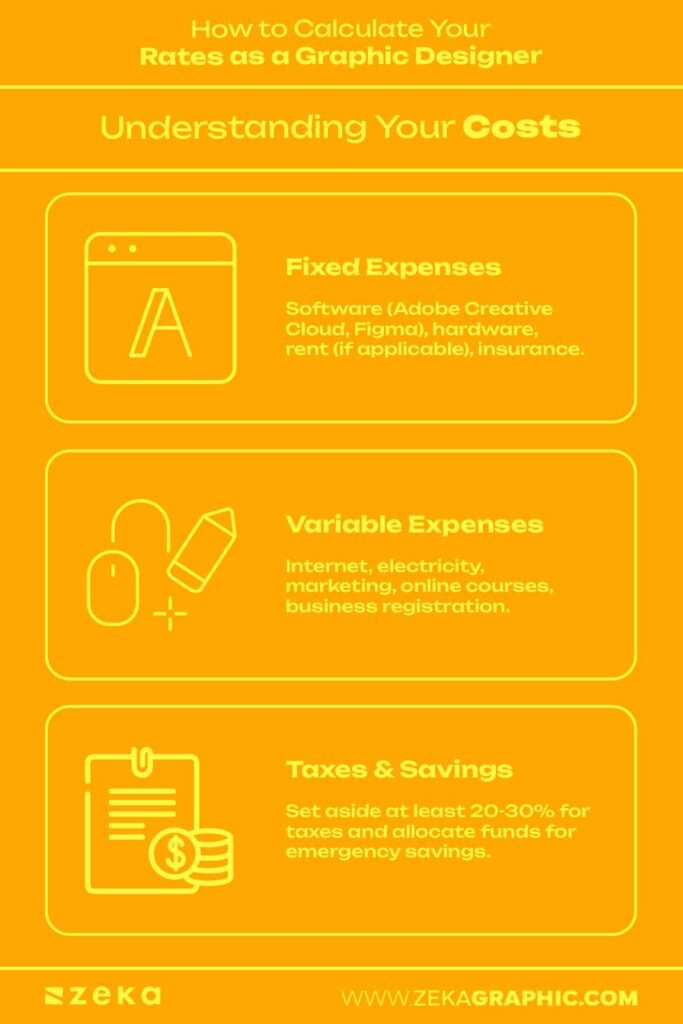
- Fixed expenses (internet, software)
- Variable expenses (freelance tools, ads)
- Business investments (hardware, courses)
This structure helps during tax filing.
Step 4: Set Tax Saving Percentage
A safe rule:
- 15%–30% of income reserved for tax
This prevents last-minute panic during filing season.
Step 5: Track Deductible Expenses Monthly
Don’t wait for year-end.
Record:
- Software subscriptions
- Equipment purchases
- Internet bills
- Electricity (business portion)
Use Google Sheets or accounting tools.
Yes, even a simple calculater sheet works fine if used consistently.
Step 6: Apply Depreciation on Big Assets
For items like laptops or tablets:
- Spread cost over 2–3 years
- Don’t deduct full cost in one year
This is compliant with FBR expectations.
Step 7: Build Emergency & Tax Buffer Fund
Create two savings pools:
- Emergency fund (3–6 months expenses)
- Tax reserve fund (annual tax liability)
This prevents financial stress.
Step 8: Review Budget Monthly
At the end of every month:
- Compare income vs expenses
- Adjust savings percentage
- Track tax liability estimate
Consistency beats perfection.
Comparison Table: Poor Budget vs Tax-Saving Budget
| Feature | Poor Budgeting | Tax-Saving Budget |
|---|---|---|
| Income Tracking | Irregular | Monthly structured |
| Expense Tracking | Missing records | Fully categorized |
| Tax Planning | Reactive | Proactive |
| FBR Compliance | Weak | Strong |
| Savings Growth | Unstable | Consistent |
Common Mistakes Graphic Designers Make
Here are mistakes I see all the time:
1. Ignoring Small Expenses
Fonts, plugins, and tools add up quickly.
2. Not Tracking USD Income Properly
Exchange rate inconsistency creates reporting issues.
3. Mixing Personal Purchases
Buying personal gadgets under business records causes problems.
4. No Monthly Review System
Budgeting without review is just guessing.
Here is the truth: budgeting is not math—it’s discipline.
Pro Tip: Use the 50-30-20 Rule for Freelancers
A simple structure:
- 50% → Living expenses
- 30% → Business reinvestment
- 20% → Tax + savings
This keeps your freelance finances stable.
Why Tax-Saving Budgeting Improves Your Income
When you manage budget properly:
- You identify wasteful expenses
- You increase savings rate
- You reduce taxable income legally
- You improve financial confidence
And most importantly—you stop living paycheck to paycheck.
Real Talk: Why Designers Struggle with Taxes
Most graphic designers:
- Focus on creativity, not accounting
- Earn irregular income
- Ignore documentation
But here’s the big brother advice:
If you treat freelancing like a business, your income starts behaving like a business too.
Why gigtax.site Recommends Budget Discipline
At gigtax.site, we believe freelancers should:
- Earn smarter
- Track better
- Save legally
A tax-saving budget is not about reducing tax illegally—it’s about structuring your finances intelligently.
Final Thoughts
Learning how to create a tax-saving budget as a graphic designer is one of the most important financial skills you can develop in Pakistan’s freelance economy.
If you:
- Track income properly
- Categorize expenses
- Reserve tax funds
- Plan monthly budgets
Then tax season becomes smooth—not stressful.
And honestly, once you build this system, you stop worrying about money and start controlling it.
CTA: Take Control of Your Freelance Finances
If you are serious about freelancing in Pakistan, don’t just design—design your financial future too.
Become a filer, stay on the ATL, and build a tax-efficient financial system today.
For expert guides, freelancer tax strategies, and financial planning resources, visit gigtax.site—your trusted platform for building long-term financial success in Pakistan’s freelance economy.
Leave a Reply