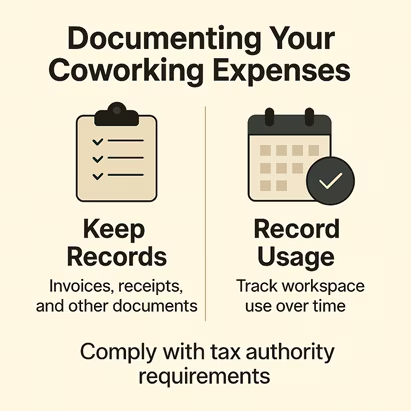
Introduction: Why Co-Working Receipts Actually Matter for Freelancers
Look, I get it, taxes are boring but if you’re a freelancer or remote worker in Pakistan, co-working spaces are not just about Wi-Fi and coffee—they are actually a legitimate tax-deductible business expense under FBR rules for Tax Year 2025-2026.
Here is the real talk: most freelancers pay for co-working spaces every month but completely fail to properly document receipts. That means they lose out on legal tax savings every single year.
At gigtax.site, we see this mistake all the time. People earn well but forget the simplest part—managing co-working space receipts for tax deductions properly.
Let’s fix that today.

Why Co-Working Spaces Are Tax-Deductible in Pakistan
Under FBR guidelines (2025-2026), any expense directly related to earning income can be claimed as a business expense if:
- It is used for work purposes
- It is properly documented
- It is linked to business activity
Co-working spaces qualify because they provide:
- Work environment for freelancing
- Internet and utilities
- Meeting rooms for clients
- Business infrastructure
So yes—your co-working rent is 100% a legitimate deductible expense (if managed correctly).

FBR Requirements for Claiming Co-Working Expenses
To avoid issues during tax filing, FBR expects:
1. Valid Receipts or Invoices
Must include:
- Business name or your name
- Date of payment
- Amount paid
- Service provider details
2. Proof of Payment
- Bank transfer proof
- Online payment record
- Avoid cash-only undocumented payments
3. Business Relevance
You must show:
- Freelance income activity
- Use of space for work-related tasks
Without this, deductions may be questioned.
Common Types of Co-Working Expenses You Can Claim
Freelancers in Pakistan can usually claim:
1. Monthly Membership Fees
This is the main deductible expense.
2. Day Passes
If you use spaces occasionally.
3. Meeting Room Charges
Client meetings or presentations.
4. Additional Services
- Printing
- Event space usage
- Dedicated desk upgrades
Here is the truth: even small add-ons matter if tracked properly.
Comparison Table: Proper vs Improper Receipt Management
| Criteria | Improper Management | Proper Management |
|---|---|---|
| Receipts | Missing or informal | Digitally stored invoices |
| Tax Claim | Rejected or ignored | Fully deductible |
| Audit Risk | High | Low |
| Expense Tracking | Random | Structured monthly logs |
| FBR Compliance | Weak | Strong |
Step-by-Step Guide: Managing Co-Working Space Receipts for Tax Deductions
Now let’s make this practical and simple.
Step 1: Always Request Proper Invoice
Never rely on casual receipts.
Ensure invoice includes:
- Your name or business identity
- Co-working space details
- Payment breakdown
- GST/NTN details if available
This is your primary proof.
Step 2: Use Digital Payments Only
Always prefer:
- Bank transfers
- Debit/credit card payments
- Digital wallets
Cash payments create documentation gaps and weakens your claim during audit.
Step 3: Organize Monthly Receipt Folder
Create folders like:
- January 2025 Co-Working
- February 2025 Co-Working
Store:
- PDFs
- Screenshots
- Payment confirmations
This simple habit saves massive headache later.
Step 4: Record Expense in Monthly Books
Whether you use:
- Google Sheets
- Accounting software
- Or a basic calculater sheet
Log:
- Date
- Amount
- Co-working space name
- Purpose (work, meeting, etc.)
Consistency matters more than complexity.
Step 5: Categorize as Business Expense
When filing taxes:
- Classify under “Office/Workspace Expense”
- Ensure it aligns with freelance income
This is critical for FBR acceptance.
Step 6: Match Receipts with Bank Statements
Before filing:
- Cross-check all payments
- Ensure no missing entries
- Fix inconsistencies early
This step is often ignored and causes filing errors.
Step 7: Prepare Annual Summary Report
At year-end:
- Total co-working expenses
- Monthly breakdown
- Supporting documents attached
This makes tax filing smooth and audit-proof.
How Co-Working Expenses Reduce Your Tax Liability
Let’s simplify this:
If you earn:
- Rs. 2,000,000 annually
And co-working expenses are:
- Rs. 240,000 annually
Your taxable income reduces to:
- Rs. 1,760,000
Now your tax slab changes—and you pay less tax legally.
That’s why documentation is powerful.
Pakistan Freelance Tax Slabs (2025-2026)
| Annual Income (PKR) | Tax Rate |
|---|---|
| 0 – 600,000 | 0% |
| 600,001 – 1,200,000 | 5% |
| 1,200,001 – 2,400,000 | 15% |
| 2,400,001 – 3,600,000 | 25% |
| Above 3,600,000 | 30% |
Proper expense management can move you into lower taxable brackets.
Common Mistakes Freelancers Make with Co-Working Receipts
Let’s fix what most people mess up:
1. Losing Monthly Receipts
This is the most common mistake.
2. Paying in Cash Without Records
FBR does not accept “trust me bro” accounting.
3. Mixing Personal Visits with Business Claims
Only business usage qualifies.
4. Not Categorizing Expenses Properly
If your records are messy, deductions become weak.
Here is the truth: documentation is more important than income sometimes.
Pro Tip: Build a Co-Working Expense System
Advanced freelancers do this:
- Maintain monthly expense tracker
- Store cloud backups
- Automate payment reminders
- Use accounting tools for categorization
Even simple structure improves tax efficiency.
Why Managing Receipts Properly Saves You Stress
When your records are clean:
- Tax filing becomes faster
- Refunds or adjustments are easier
- Audit risk reduces significantly
And honestly, peace of mind is worth more than small tax savings.
Real Talk: Why Freelancers Ignore This
Most freelancers think:
- “It’s just a small expense”
- “I’ll manage it later”
- “Receipts are not important”
But here is the big brother advice:
Small receipts build big deductions over time.
Ignoring them is like throwing money away quietly.
Why gigtax.site Recommends Structured Expense Tracking
At gigtax.site, we always focus on one principle:
Smart freelancers don’t just earn—they document everything that builds wealth.
Co-working expenses are a perfect example of legal, simple tax optimization that most people ignore.
Final Thoughts
Managing co-working space receipts for tax deductions is not complicated—but it requires discipline.
If you:
- Collect proper invoices
- Track payments monthly
- Categorize expenses correctly
- Maintain digital records
Then you can legally reduce taxable income and stay fully compliant with FBR regulations for 2025-2026.
And once you build this habit, tax season stops being stressful—it becomes predictable.
CTA: Build Your Smart Freelancer Tax System
If you’re serious about freelancing in Pakistan, don’t ignore small expenses—they shape your tax outcome.
Become a filer, stay on the ATL, and build a proper financial documentation system today.
For expert tax guides, freelancer strategies, and financial planning insights, visit gigtax.site—your trusted platform for building smarter financial habits in Pakistan’s freelance economy.
Leave a Reply